
Official question bank: Car (B)
These questions come from the official theory question bank published by Transport Malta — the real test draws from this pool. Turkish and Maltese translations are ours; the test itself is in English or Maltese.
 Car (B)
 Motorcycle (A/A1/A2/AM)
 Lorry (C)
 Bus / coach (D)
1. Alertness
Before making a U-turn in the road you should always:
A final look over your shoulder checks the blind spot for traffic, pedestrians or cyclists that your mirrors may not show before you turn.
As a driver what do you understand by the term 'Blind Spot'?
A blind spot is an area around the vehicle that cannot be seen in the mirrors, so you must look over your shoulder to check it.
What does the abbreviation MSM mean?
MSM stands for Mirror – Signal – Manoeuvre, the routine to follow before changing speed or direction.
When following a large vehicle you should stay well back because
If you stay well back, the driver of the large vehicle can see you in the mirrors and you also get a better view of the road ahead.
In which of these following situations should you avoid overtaking?
A dip in the road can hide oncoming vehicles, so you cannot be sure it is safe to overtake.
You should not use a mobile phone whilst driving
Using a mobile phone takes your attention away from the road and the traffic around you.
Your vehicle is fitted with a hands-free phone system. Using this equipment whilst driving
Even with a hands-free system, a phone conversation can distract your attention from the road.
Using a hands-free phone is likely to
A hands-free call still diverts your attention from driving, even though your hands stay on the wheel.
Using a mobile phone while you are driving
Using a mobile phone while driving can distract your attention from the road and increase the risk of a crash.
You are driving along a narrow country road. When passing a cyclist you should drive
Pass cyclists slowly and leave plenty of room, as they may wobble or swerve; sounding the horn can startle them.
To answer your mobile phone when driving you should:
Only answer a call after stopping safely in a proper and convenient place where you are not obstructing traffic.
Why should you be parked before using a mobile phone?
Using a phone while moving reduces your control of the vehicle, so you should be safely parked first.
You are driving in the dark and are dazzled by the headlights of an oncoming car. You should
If you are dazzled you cannot see properly, so slow down or stop until your vision recovers; do not flash back.
You are driving at dusk. Your lights should be switched on
At dusk, lights help others see you, and they should be on even when street lights are lit.
To overtake safely which one of the following applies?
Before overtaking, check the speed and position of following traffic in your mirrors to be sure no one is about to overtake you.
The white arrow in the diagram means that you should not plan to:

A white deflection arrow on the road warns you not to overtake and to return to your lane.
The road marking in the diagram warns:

The deflection arrow tells overtaking drivers to move back to the left (into the normal lane in Malta).
Objects or articles hanging from your interior mirror may:
Items hanging from the mirror can distract you and restrict your view of the road.
When driving you are most likely to lose concentration if you:
Very loud music and using a mobile phone both take your attention away from the road.
When driving, which four are most likely to cause you to lose concentration?
Looking at a map, tuning the radio, talking into a microphone and using a mobile phone all distract you; demisters and mirror checks are part of normal driving.
You are driving on a wet road and you have to stop your vehicle in an emergency. You should:
In an emergency stop keep both hands on the wheel to keep control of the vehicle, especially on a wet road.
Which of the following may cause distraction on a long journey?
Inserting a CD, using a phone, arguing with a passenger and loud music all distract you; pulling up or resting does not.
You want to use a mobile phone whilst driving the car. You should only use the phone:
Only use a hand-held phone after you have stopped in a suitable, safe place.
What is the safest way to use a mobile phone in a car?
The safest way is to find a suitable place to stop before using the phone.
2. Attitude
A pelican crossing that crosses the road in a STRAIGHT line and has a central traffic island MUST be treated as:
A straight pelican crossing, even with a central island, is one crossing, and you must wait for pedestrians to finish crossing.
When at a pelican crossing the amber light means you MUST
A steady amber light means stop unless it is unsafe to do so; you must still give way to pedestrians already on the crossing.
You are approaching a pelican crossing. The amber light is showing. You MUST:
At a steady amber you must stop and wait for the red, even if the crossing is clear, and not move off until green shows.
You are approaching a zebra crossing. Pedestrians are waiting to cross. You should:
Be ready to stop for pedestrians waiting at a zebra crossing, but do not signal them to cross as another vehicle may not stop.
You have stopped at a pedestrian (zebra) crossing to allow pedestrians to cross. You should:
Wait patiently until the pedestrians have crossed; do not wave them on, rev the engine or edge forward.
You should never wave or urge people across at a pedestrian crossing because:
Another vehicle may be coming and may not stop, so waving pedestrians across could lead them into danger.
At a Pedestrian (zebra) crossing you should:
Keep zebra crossings clear when queuing in traffic so pedestrians can cross safely.
You stopped for pedestrians waiting to cross at a zebra crossing. They did not start to cross. What should you do?
Pedestrians may be hesitant or slow; be patient and wait rather than waving, sounding the horn or driving on.
You may use the 'Two-Second Rule'
The two-second rule helps you keep a safe gap from the vehicle in front in good conditions.
When following another vehicle whilst driving on the road you should not
Following too closely leaves you no time or space to stop if the vehicle in front brakes suddenly.
Following this vehicle too closely is unwise because:

Too close behind a large vehicle, your view ahead is blocked and the driver cannot see you in the mirrors.
You are following a vehicle on a wet and slippery road. You should leave a time gap of at least
Stopping distances increase on wet and slippery roads, so allow a time gap of at least four seconds.
You are in a line of traffic. The driver behind you is following very closely. What action should you take?
By slowly increasing the gap in front, you give yourself more time to brake gently, reducing the risk of the tailgater hitting you.
You are driving at the legal speed limit. A vehicle comes up quickly behind flashing its headlights. You should:
Let the vehicle overtake; do not try to block it, brake-test it or race it, as that can lead to a collision.
When are you permitted to exceed the maximum speed limit?
The maximum speed limit is a legal limit that must never be exceeded, whatever the road conditions or time of day.
A heavy lorry is taking a long time to overtake you. What should you do?
Slowing down helps the lorry complete its overtake and get back in sooner, which is safer for everyone.
Which of the following cars will use blue flashing beacons?
Blue flashing beacons are used by emergency vehicles such as police patrols and ambulances.
When being followed by an ambulance showing a flashing blue light you should:
Help the ambulance get past by pulling over when it is safe; avoid sudden braking or stopping in a dangerous place.
A bus has stopped at a bus stop ahead of you. Its right-hand indicator is flashing. You should
A bus signalling to pull out from a stop should be given way to if it is safe, so slow down and let it move off.
You should ONLY flash your headlights to other road users:
Flashing your headlights has the same meaning as sounding the horn: it only lets others know you are there.
Why should you use your horn?
The horn should only be used to warn other road users of your presence, never to show annoyance or to greet.
You are in a one-way street and want to turn right. You should place yourself
In a one-way street, position yourself as close as safely possible to the right-hand side when you intend to turn right.
You wish to turn right ahead. Why should you take up the proper position in good time?
Taking up the correct position early, together with your signal, helps other road users understand what you intend to do.
When should you give signals?
Signals warn other road users, including pedestrians, of your intentions; give them after checking it is safe and before changing course, turning, stopping or moving off.
You are driving on a clear night. There is a steady stream of oncoming cars. The national speed limit applies. Which lights should you use?
With oncoming traffic, use dipped headlights so you can see without dazzling other drivers.
You are waiting in a traffic queue at night. To avoid dazzling the drivers behind you should:
Use only the handbrake while waiting so your bright brake lights don't dazzle drivers behind.
You are driving a slow-moving car on a narrow winding road. You should:
Pull in safely when you can so following vehicles can overtake; don't wave them past or signal them on.
You are driving a slow-moving car on a narrow road. When traffic wishes to overtake you should:
Pull in safely as soon as you can to let the traffic behind overtake.
You are driving a slow-moving car on a narrow winding road. In order to let other vehicles overtake, you should:
Pull in safely when you can; signalling or waving others past could lead them into danger.
Which of the following are at greatest risk from other road users?
Motorcyclists are vulnerable and harder to see, so they are at greatest risk from other road users.
3. Safety and your vehicle
Which of these fluids, if allowed to get low, is dangerous?
Low brake fluid can cause the brakes to fail, which is extremely dangerous.
Which TWO are adversely affected if the tyres are under-inflated?
Under-inflated tyres make the steering heavier and less precise and reduce braking efficiency.
It is important that tyre pressure is regularly checked. When should this be done?
Tyre pressures should be checked when the tyres are cold, as heat from driving raises the pressure and gives a false reading.
It is very important that tyre pressures are correct. They should be checked at least:
Tyre pressures should be checked at least once a week to keep the vehicle safe.
Driving with under-inflated (low) tyres can affect:
Under-inflated tyres reduce braking efficiency and increase rolling resistance, so fuel consumption goes up.
When MUST you use dipped lights during the day?
You must use dipped headlights during the day when visibility is poor, so that you can see and be seen.
How can you as a vehicle driver help the environment?
A well-serviced vehicle, gentle acceleration and lower speeds all reduce fuel use and emissions.
Motor vehicles can harm the environment resulting in:
Motor vehicles use up natural resources such as oil, their emissions damage buildings and they cause air pollution.
To reduce the damage your vehicle causes to the environment you should:
Planning ahead, braking in good time and avoiding harsh acceleration give smoother driving that uses less fuel and causes fewer emissions.
You will help your environment if you:
Walking or cycling instead of driving, when you can, produces no exhaust emissions.
To help the environment you should NOT:
Very short journeys with a cold engine use a lot of fuel and cause high emissions, so avoid using the vehicle for them.
Excessive or uneven wear on the tyres can be caused by faults in:
Faults in the suspension, wheel alignment or braking system can cause excessive or uneven tyre wear.
Which of the following will reduce fuel consumption?
Planning ahead and driving at lower speeds avoid unnecessary acceleration and braking, which reduces fuel consumption.
You should NOT sound your horn:
According to the official answer, you should not sound your horn in a built-up area between 11.00 pm and 6 am, except to avoid danger.
In some residential roads you will find a speed limit of:
Some residential roads have a reduced speed limit of 35 kph to protect pedestrians and residents.
Road humps, chicanes and narrowing are:
Road humps, chicanes and road narrowings are traffic calming measures designed to slow traffic down.
You enter a road where there are road humps. You should:
Road humps are there to keep traffic speed down along the whole road, so maintain a reduced speed throughout.
Which FOUR of these MUST be in good working order for your car to be safe and roadworthy?
Indicators, brakes, the exhaust system and lights must all work properly for the car to be safe and roadworthy.
New petrol-engined cars have to be fitted with catalytic converters. The reason for this is to:
Catalytic converters reduce the harmful gases in exhaust emissions.
What can cause heavy or difficult steering?
Under-inflated tyres increase rolling resistance and make the steering heavy.
Your car is fitted with power assisted steering. This will make the steering seem:
Power assisted steering makes the steering feel lighter, especially at low speed.
A police officer orders you to stop and finds you have a faulty tyre. Who is responsible for the tyre?
The driver is responsible for the roadworthiness of the vehicle being driven, including its tyres.
The legal minimum depth of tread for car tyres over three quarters of its breadth is:
The legal minimum tread depth for car tyres is 1.6mm across the central three quarters of the tread.
Excessive or uneven wear in one or more tyres can be caused by faults in the:
Faults in the suspension or braking system can cause excessive or uneven tyre wear.
There is vibration on your steering wheel as you drive at certain speeds. You should check that the:
Steering vibration at certain speeds usually means the wheels are unbalanced or not secure.
Your vehicle pulls to one side when braking heavily. You should:
Pulling to one side under braking indicates a brake fault – have it checked by a competent mechanic as soon as possible.
The main cause of brake fade is:
Brake fade is mainly caused by the brakes overheating, e.g. through continuous use on a long downhill.
Your anti-lock brakes warning light stays on. You should:
If the ABS warning light stays on there is a fault – have the brakes checked immediately.
When may you use hazard lights?
Hazard lights warn others that your vehicle has broken down and is a temporary obstruction; they don't allow illegal parking.
Hazard lights should be used when vehicles are:
Use hazard lights when your vehicle has broken down and is causing an obstruction.
A properly adjusted head rest will:
A correctly adjusted head restraint helps prevent neck (whiplash) injury in a collision.
What will reduce the risk of neck injury resulting from a car collision?
A properly adjusted head restraint reduces the risk of neck injury in a collision.
To reduce harming the environment you can avoid wasting fuel by:
Avoiding over-revving, keeping tyres correctly inflated and servicing your vehicle all save fuel; an empty roof rack and high speeds waste it.
Why do VRT tests include an exhaust emission test?
The emission test checks that the vehicle's exhaust fumes are within limits, helping protect the environment against pollution.
You are testing the suspension of your car. You notice that your vehicle keeps bouncing when you press down on the front wing. What does this mean?
If the car keeps bouncing after you press down on it, the shock absorbers are worn.
Which THREE of the following are most likely to increase fuel consumption?
An empty roof rack (extra drag), under-inflated tyres and carrying unnecessary weight all increase fuel consumption.
The filler cap on your diesel fuel tank is loose. This will:
A loose filler cap lets diesel spill, making the road slippery for others, and wastes fuel and money.
Care should be taken when refuelling with diesel because when spilt it is:
Spilt diesel makes the road surface very slippery, especially for motorcyclists.
If you cannot see clearly behind when reversing, what should you do?
If you can't see clearly behind you, ask someone to guide you while reversing.
A properly serviced car will give:
A well-serviced car produces cleaner exhaust emissions and better fuel economy.
When a roof rack is not in use it should be removed. Why?
An unused roof rack increases wind resistance, so it wastes fuel.
A roof rack that is fitted to your car will:
A roof rack increases wind resistance and therefore increases fuel consumption.
To reduce the volume of cars on the roads you could:
Walking or cycling short journeys, car sharing and using public transport all reduce the number of cars on the road.
For which TWO of these should you use hazard warning lights?
Use hazard warning lights when broken down and causing an obstruction, and briefly to warn drivers behind of a hazard ahead when slowing down.
If daytime visibility is poor but not seriously reduced you should switch on:
In poor (but not seriously reduced) daytime visibility use dipped headlights; fog lights are only for seriously reduced visibility.
4. Safety margins
If you are on a good dry road surface and your vehicle has good brakes and tyres. What is the overall stopping distance at 48 kph?
In good dry conditions the overall stopping distance (thinking plus braking distance) at 48 kph is about 23 metres (75 feet).
Braking hard at a high speed on a sharp bend can make your vehicle:
Braking hard on a sharp bend at speed shifts the weight of the vehicle and can make it unstable and skid.
When driving in fog which of the following measures are correct?
In fog use dipped headlights, slow down and allow more time for your journey; full beam reflects back off the fog.
The 'two-second rule' allows you to:
The two-second rule is a simple way to keep a safe distance from the car in front.
Your overall stopping distance will be longer when driving:
Wet roads reduce tyre grip, so braking distances, and therefore overall stopping distances, are longer in the rain.
You are driving in heavy rain. Your steering suddenly becomes very light. You should:
Light steering in heavy rain means the tyres are aquaplaning; ease off the accelerator to let them regain grip and avoid braking hard.
The MAIN cause of skidding is:
Skids are mainly caused by the driver, for example by braking, accelerating or steering too harshly for the conditions.
If you are at a junction with limited visibility you should:
With limited visibility, creep forward slowly while looking both ways until you can see clearly that it is safe.
In very hot weather the road surface can get soft. Which TWO of the following will be affected most?
A soft road surface in hot weather reduces tyre grip, which affects steering and braking.
Your indicators may be difficult to see in bright sunlight. What should you do?
If your indicators are hard to see in bright sunlight, give an arm signal as well so other road users know your intentions.
How can you use the engine of your vehicle as a brake?
Changing down to a lower gear increases engine braking, which helps to slow the vehicle, especially downhill.
You are driving in a built-up residential area. You are approaching road humps. You should:
Road humps are meant to slow traffic; slow right down to go over them safely and comfortably.
When approaching a right-hand bend you should keep well to the left. Why is this?

Keeping to the left on a right-hand bend gives you a better view around the bend so you can spot hazards earlier.
You are approaching a right-hand bend. You should:

Keeping well to the left on a right-hand bend gives you a better view around the bend.
You should not overtake when:
Do not overtake when your view ahead is blocked, when approaching a junction, or when you intend to turn left shortly afterwards.
If your car is fitted with anti-lock brakes and you need to stop in an emergency, you should:
With ABS, press the brake pedal rapidly and firmly and keep it pressed until you stop – the system prevents the wheels locking.
Anti-lock brakes reduce the chances of a skid occurring particularly when:
ABS is most useful under emergency braking, when the wheels are most likely to lock and skid.
Vehicles fitted with an anti-lock brake system:
ABS prevents the wheels locking, so you can still steer while braking.
Anti-lock brakes may not work as effectively as you expect if the road surface is:
On loose or wet surfaces ABS may be less effective, so stopping distances can still be longer.
What is the MOST common reason a car skids?
Most skids are caused by driver error, such as excessive speed or harsh braking, steering or acceleration.
When braking hard in a straight line most of the weight of the vehicle will shift onto the:
Under hard braking the weight transfers forward onto the front wheels.
You have driven your car through a flood. What is the first thing you should do?
After driving through water, test your brakes first, as wet brakes may not work properly.
You are turning left on a slippery road. The back of your vehicle slides to the right. You should:
Steer carefully in the same direction as the rear is sliding – to the right – to regain control, and avoid braking.
Your vehicle does not have anti-lock brakes. If you are braking on a wet road and your vehicle begins to skid, what is the FIRST thing you should do?
Without ABS, a braking skid is caused by locked wheels – release the footbrake fully first so the wheels can grip again.
Clutch coasting will:
Coasting with the clutch down removes engine braking and reduces the driver's control of the vehicle.
You are about to go down a steep hill. To control the speed of your car you should:
Select a low gear for engine braking and use the brakes carefully to avoid them overheating.
You are on a long downhill slope. What should you do to help control the speed of your car?
A lower gear uses engine braking to help hold your speed down, so you don't overheat the brakes by relying on them alone.
You wish to park facing DOWNHILL. Which TWO of the following should you do?
Turning the wheels towards the kerb means the kerb stops the car if it starts to roll, and a firmly applied handbrake keeps it stationary.
When should you use front and rear fog lights?
Fog lights are only for when visibility is considerably reduced, such as in fog; at other times they dazzle other road users.
5. Hazard awareness
A driver can only read a number plate at the required distance with glasses on. The glasses should be worn:
If you need glasses to meet the eyesight standard, you must wear them every time you drive.
You are about to drive home. You cannot find the glasses you need to wear when driving. You should:
Without the glasses you need, you are not fit to drive, so find another way home.
You MUST wear glasses or contact lenses when driving on public roads if:
According to the official answer, you must wear glasses or contact lenses if you cannot read a number plate from 20.5 metres (67 feet) without them.
Which THREE result from drinking alcohol and driving?
Alcohol reduces your control, impairs your judgement of speed and gives a false sense of confidence.
Which THREE of these are likely effects of drinking alcohol on driving?
Alcohol causes poor judgement, overconfidence and reduced co-ordination, all of which make driving dangerous.
Drinking any amount of alcohol is likely to:
Even a small amount of alcohol gives false confidence, worsens your judgement of speed and slows your reactions to hazards.
You are invited to a pub lunch. You know that you will have to drive in the evening. What is your best course of action?
The only safe option when you know you will be driving is not to drink any alcohol at all.
What else can seriously affect your concentration when driving other than alcoholic drinks?
Loud music, tiredness and drugs can all seriously affect your concentration when driving.
How does alcohol affect your driving?
Alcohol reduces your concentration and slows your reactions, making you a more dangerous driver.
After drinking alcohol heavily you should not drive the following day. Why is this?
After heavy drinking, alcohol can stay in your body into the next day, so you may still be over the limit and your concentration impaired.
What advice should you give to a driver who has had a few alcoholic drinks at a party?
A driver who has been drinking should not drive; using public transport is the safe choice, as waiting a short while or drinking coffee does not remove alcohol.
You go to a social event and need to drive a short time after. What precautions should you take?
If you need to drive soon after, the only safe precaution is to avoid alcohol completely.
It is eight hours since you last had an alcoholic drink. Which TWO of the following applies?
Alcohol can remain in your body for many hours, so after eight hours you may still be over the legal limit and unfit to drive.
Your doctor has given you a course of medicine. Why should you ask if it is OK to drive?
Some medicines can slow your reactions or cause drowsiness, so always ask whether it is safe to drive.
You have been taking medicine for a few days which made you feel drowsy. Today you feel better but still need to take the medicine. You should only drive:
Only drive after checking with your doctor, as the medicine may still affect your ability to drive even if you feel better.
You become ill. A doctor prescribes drugs which are likely to affect your driving. You should:
If prescribed drugs are likely to affect your driving, you should not drive yourself.
During periods of illness your ability to drive may be impaired. You MUST:
You must be medically fit to drive and must not drive after taking medicines that can affect your driving.
You are taking drugs that are likely to affect your driving. What should you do?
If drugs are likely to affect your driving, seek medical advice before you drive.
If you are feeling tired it is best to stop as soon as you can. Until then you should:
Fresh air can help you stay alert for a short time until you can stop safely and rest.
Your reaction will be much slower when driving:
Tiredness slows your reactions considerably, so you should not drive when you are tired.
Which THREE are likely to make you lose concentration while driving?
Using a mobile phone, listening to loud music and looking at road maps all take your attention away from driving.
A driver pulls out of a side road in front of you. You have to brake hard. You should
Everyone makes mistakes; stay calm and do not react aggressively, as this could lead to further danger.
A car driver pulls out causing you to brake. You should:
Keep calm and do not retaliate; reacting aggressively only increases the risk of a collision.
Another driver does something that upsets you. You should:
Try not to react to other drivers' behaviour; staying calm keeps you and others safe.
An elderly person's driving ability could be affected because they may be unable to:
Reactions tend to slow with age, so an elderly driver may be unable to react very quickly.
You take the wrong route and find you are well into a one-way street. You should:
Never drive against the flow or reverse out of a one-way street; continue to the end and find another route.
What is the maximum permissible alcohol level above which a driver must not drive?
According to the official answer, the limits are 35 mg per 100 ml of breath or 80 mg per 100 ml of blood.
You see this sign ahead. You should expect the road to:

This warning sign shows a sharp bend to the left ahead – slow down before the bend.
A correct seating position will enable you to:
A correct seating position lets you hold the steering wheel properly, see well through the windows and reach the pedals comfortably.
6. Vulnerable road users
You are driving on a quiet country road. What should you expect to see coming towards you on YOUR side of the road?
Where there is no pavement, pedestrians should walk facing oncoming traffic, so they may come towards you on your side of the road.
Which sign means that there may be people walking along the road?
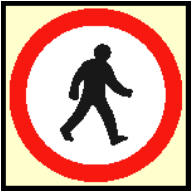
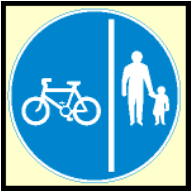
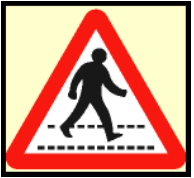
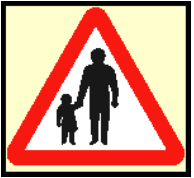
The correct sign warns that there may be pedestrians walking along the road ahead.
You are turning left into a side road and find pedestrians that are crossing. You must:
Pedestrians already crossing the road you are turning into have priority, so you must wait for them to cross.
You are turning left at a junction. Pedestrians have suddenly started to cross the road. You should:
Pedestrians who have started to cross the road you are turning into have priority; give way to them.
You want to emerge from a junction but your view is partly restricted by parked vehicles. What should you do?
Stop, then creep forward slowly until you can see clearly; watch especially for cyclists, motorcyclists and pedestrians.
You are at the front of a queue of traffic waiting to turn right into a side road. Why is it important to check your right mirror just before turning?
While you wait, a motorcyclist or other vehicle may be overtaking the queue on your right, so check the right mirror before turning.
What should a driver do at a pelican crossing when the red and amber lights are on?
According to the official answer, you must give way to any pedestrians still on the crossing before moving off.
You have stopped at a pelican crossing. A disabled person is crossing slowly in front of you. The lights have now changed to green. You should:
Even when the light turns green, you must allow the person to finish crossing and be patient.
As you approach a pelican crossing the lights change to green but elderly people are halfway across. You should:
Elderly people may take longer to cross, so wait patiently even after the lights turn green.
Look at this picture. What is the danger you should be most aware of?
Children near an ice cream van may not look before running into the road, so this is the greatest danger.
You are driving past parked cars. You notice a wheel of a bicycle sticking out between them. What should you do?
A bicycle wheel between parked cars suggests a cyclist may come out, so slow down and be ready to stop.
You are driving past a lane of parked cars and you notice a ball bouncing out into the road ahead. What should you do?
A ball in the road is often followed by a child running after it, so slow down and be prepared to stop.
If you are following a car driven by an elderly driver you should:
An elderly driver's reactions may be slower, so allow extra time and space.
Which sign tells you that pedestrians may be walking in the road as there is no pavement?
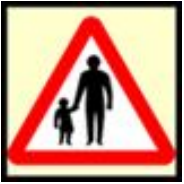
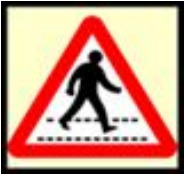
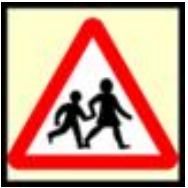
The correct sign warns that there is no pavement, so pedestrians may be walking in the road.
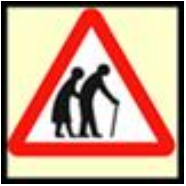
Which sign means there may be elderly pedestrians likely to cross the road?
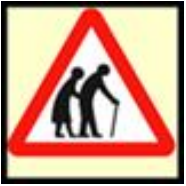
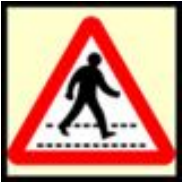
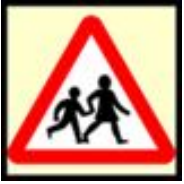
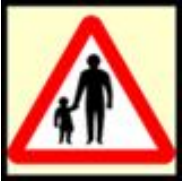
The correct sign warns of elderly or frail pedestrians likely to be crossing the road.
If you see a pedestrian carrying a white stick, this shows that the person is:
A white stick shows that the pedestrian is blind or partially sighted, so take extra care.
You are driving towards a pedestrian (zebra) crossing. Waiting to cross is a person in a wheelchair. You should:
Be prepared to stop and let the person in the wheelchair cross; do not wave them on.
What action should you take when elderly people are crossing the road?
Elderly people may be slow to cross, so be patient and let them cross in their own time without hurrying them.
You should NEVER attempt to overtake a cyclist:
Overtaking a cyclist just before turning left means cutting across their path, which could cause a collision.
If you are driving behind a cyclist and you wish to turn left just ahead. You should:
Hold back until the cyclist has passed the junction so you do not cut across their path when turning left.
You are coming up to a roundabout and a cyclist is signalling to turn right. What should you do?
A cyclist may keep to the left at a roundabout even when turning right, so give them plenty of room.
You are driving behind three cyclists. They approach a roundabout in the left-hand lane. In which direction should you expect the cyclists to go?
Cyclists often keep to the left-hand lane at roundabouts whatever their exit, so they could go in any direction.
You are approaching a roundabout and see a cyclist signal right. Why is the cyclist keeping to the left?
Cyclists are slower and more vulnerable, so they may keep to the left at a roundabout even when turning right.
When you are overtaking a cyclist in the road you should leave as much room as you would give to a car. What is the main reason for this?
Cyclists can swerve suddenly to avoid potholes, drains or gusts of wind, so give them as much room as a car.
Where should you take particular care to look out for motorcyclists and cyclists?
Motorcyclists and cyclists are small and easily hidden, and many collisions with them happen at junctions.
In daylight an approaching motorcyclist is using a dipped headlight. Why?
Motorcyclists use dipped headlights in daylight so that they can be seen more easily by other road users.
You are driving behind a moped or a small motorcycle. You want to turn left just ahead. You should:
Stay behind the moped until it has passed the junction, so that you do not cut across its path when turning left.
At road junctions which THREE of the following are most vulnerable?
Motorcyclists, cyclists and pedestrians have little protection and are easily overlooked at junctions.
When emerging from a side road into a queue of traffic which road users can be difficult to see?
Motorcycles are narrow and can be hidden by other vehicles in a queue, so look carefully before emerging.
You want to turn right from a main road into a side road. Just before you turn you should:
Just before turning right, check for traffic such as motorcyclists overtaking on your right.
You are driving and ahead of you there is a vehicle with a flashing amber beacon. This means it is:
A flashing amber beacon warns that the vehicle is slow moving, so be prepared to slow down.
An injured motorcyclist is lying unconscious in the road. You should:
An unconscious motorcyclist should not be moved and the helmet should not be removed unless essential; call for medical help (112) straight away.
You are driving in town. There is a bus at the bus stop on the other side of the road. Why should you be careful?
Pedestrians who have just got off the bus may step out from behind it into your path without seeing you.
How should you overtake horse riders?
Horses can be startled easily, so pass slowly and quietly, leaving plenty of room.
You notice horse riders ahead of you. What should you do FIRST?

The first thing to do is be ready to slow down, as horses may react unpredictably to traffic.
You are driving on a narrow country road. Where would you find it most difficult to see horses and riders ahead of you?
Riders keep to the left, so on a left-hand bend the hedge or wall on the inside of the bend hides them until you are very close.
A horse rider is in the left-hand lane approaching a roundabout. The driver behind should expect the rider to:
Horse riders often keep to the left lane even when going right, so be prepared for them to go in any direction.
You are approaching a roundabout. There are horses just ahead of you. You should:
Horses are vulnerable and easily frightened: give them plenty of room and be ready to stop.
You see a group of horse riders as you approach a roundabout. They are signalling to go right but keeping well to the left. You should:
Riders may keep to the left while going right round the roundabout, so stay well back and give them time and space.
What is the MOST common cause of road accidents?
Most road accidents are caused by human error rather than by vehicles, roads or weather.
Which age group is most likely to be involved in traffic accidents?
Young, inexperienced drivers aged 18 to 25 are statistically the most likely to be involved in traffic accidents.
You are following a learner driver who stalls at a junction. What should you do?
Learners are inexperienced and will make mistakes; be patient and do not pressure them.
You want to reverse into a side road. You are not sure that the area behind your car is clear. What should you do?
If you are not sure the area behind is clear, get out and check; mirrors and the rear window cannot show everything, especially small children.
You are about to reverse into a side road and a pedestrian wishes to cross behind you. You should:
Pedestrians crossing behind you have priority, so wait and give way to them before reversing.
Who is especially in danger of not being seen as you reverse your car?
Children are small and may be hidden below the rear window and out of view of the mirrors when you reverse.
You intend to turn right into a side road. Just before turning you should check for motorcyclists who may be:
In Malta we overtake on the right, so before turning right check over your right shoulder for a motorcyclist who may be overtaking you.
In which three places would parking cause an obstruction to other road users?
Parking at a bus stop, at a lowered kerb for wheelchairs or near the brow of a hill blocks buses, wheelchair users and other drivers' view.
You are following a motorcyclist on an uneven and bumpy road. You should:
On a bumpy road a motorcyclist may wobble or change position unexpectedly, so be careful and keep well back; they may also misjudge your speed.
You are following a motorcyclist on an uneven road. You should:
Motorcyclists may swerve to avoid potholes, so allow extra room behind them.
Which TWO should you allow extra room when overtaking?
Motorcycles and bicycles can wobble or be blown off course, so give them extra room when overtaking.
Why should you allow extra room when overtaking a motorcyclist on a windy day?
A strong gust can blow a motorcyclist sideways into your path, so give extra room.
Which type of vehicle is MOST affected by strong winds?
Motorcycles are light and narrow, so strong winds affect them the most.
Why should you particularly look for motorcyclists and cyclists at any junction?
Motorcyclists and cyclists are small and harder to see, so look out for them carefully at every junction.
You are waiting to come out of a side road. Why should you watch carefully for motorcycles?
Motorcycles are small and easily hidden, so look carefully before emerging from a side road.
Motorcyclists often look round over their right shoulder just before turning right. This is because:
Mirrors leave a blind area, so riders take a final look over the shoulder (the 'life saver') to check for traffic there.
Which of the following are hazards that motorcyclists present in queues of traffic?
In queues, motorcyclists may pass very close, filter between lanes and cut in just in front of you, so check mirrors before moving.
You are driving in slow-moving queues of traffic. Just before changing lane you should:
Motorcyclists often filter through slow traffic, so look for them before changing lane.
You have a collision while your car is moving. What is the first important thing you must do?
After any collision you must first stop at the scene; then deal with injuries and call 112 if needed.
If a friend wants to teach you how to drive a car they must:
According to the official answer, someone supervising a learner must be over 25 and have held a full licence for at least 5 years.
Your car hits a pedestrian at 60 kph. The pedestrian will:
At 60 kph a pedestrian who is hit will probably be killed, which is why low speeds matter where people walk.
You are dazzled at night by the lights of the vehicle behind you. You should:
Switching the interior mirror to its anti-dazzle (night) setting reduces the glare from the lights behind.
7. Other types of vehicle
You are waiting to emerge left from a minor road. A large vehicle is approaching from the right. You have time to turn, but you should wait. Why?
A large vehicle can hide another vehicle overtaking it, which could be coming towards you at speed.
You are driving behind a large articulated vehicle (trailer). It is going to turn left into a narrow road. What action should you take?
Long vehicles often swing out to the right before turning left, so be prepared to stop behind and do not try to pass.
You are driving behind a long vehicle. It approaches a crossroads and signals left, but moves out to the right. You should:
A long vehicle may need to move right to make a left turn; stay well back and give it room.
You are driving behind a long vehicle approaching a crossroad. The driver signals right but moves close to the left-hand kerb. What should you do?
The long vehicle may need to move left to make its right turn; wait behind it until it has turned.
You are approaching a small roundabout. The long vehicle in front is signaling left but is positioned over to the right. You should:

A long vehicle may need extra space to get round a small roundabout, so keep well back.
You keep well back while waiting to overtake a large lorry. Another car fills the gap. You should:
Drop back to restore a safe gap and a clear view ahead before considering overtaking.
Before overtaking a large vehicle or lorry you should keep well back. Why is this?
Keeping well back from a large vehicle lets you see much more of the road ahead before deciding to overtake.
You wish to overtake a long, slow moving vehicle or lorry on a busy road with oncoming traffic. You should:
Only overtake when you can see that the road ahead is clear; keeping well back gives you that view.
You are driving downhill. There is a car parked on the other side of the road partly blocking the road. Large, slow lorries are coming towards you. You should:
The parked car is on the other side, so oncoming lorries need to use your side to get past; slow down and give way.
When about to overtake a long vehicle or lorry you should:
Staying well back from the lorry gives you a much better view of the road ahead before you overtake.
You are traveling behind a bus that suddenly pulls up at a bus stop. What should you do?
Be ready to let the bus move off again and watch for pedestrians getting on or off or crossing near it.
You are driving in a city. Ahead of you a bus is at a bus stop. Which TWO of the following should you do?
A bus at a stop may pull out suddenly and pedestrians may appear from around it, so be ready to give way and watch carefully.
When you approach a bus that is about to move off from a bus stop you should:

Allow the bus to pull away when it is safe to do so; it helps traffic flow and avoids conflict.
What is the effect of not keeping to the two second rule 'tailgating' when driving on a dry and good road surface?
'Tailgating' means following another vehicle too closely, leaving less than the two-second gap needed to stop safely.
You are following a large lorry on a wet road. Spray makes it difficult to see. You should:

Spray from a lorry cuts your vision; dropping back improves your view and gives you more time to react.
You are driving on a dual carriageway with surface spray. You should use:
In spray, dipped headlights help you see and be seen without dazzling other drivers.
The road is wet and slippery. Why might a motorcyclist steer round drain covers on a bend?
Metal drain covers are very slippery when wet, so riders avoid them to stop the motorcycle sliding.
It is very windy. You are behind a motorcyclist who is overtaking a high vehicle. What should you do?
The rider may be buffeted by wind as they pass the high vehicle, so keep well back.
It is very blustery and windy. You are about to overtake a motorcyclist. You should:
Gusts can blow a motorcyclist off course, so allow extra room when overtaking.
8. Vehicle handling
What are TWO main reasons why coasting downhill is dangerous or wrong?
Coasting (in neutral or with the clutch down) reduces your braking and steering control, and the vehicle picks up speed downhill.
Why is coasting wrong or dangerous?
When coasting the engine is disconnected from the wheels, so there is no engine braking to help control your speed.
Hills can affect the performance of your vehicle. Which TWO apply when driving up steep hills?
Going up a steep hill the engine has to work harder and the vehicle will lose speed sooner, so you may need a lower gear.
You are approaching a bend at a high speed. You should begin to brake:
Do your braking before the bend, while travelling in a straight line, so the car is stable as you steer through it.
You are following a vehicle at a safe distance on a wet and slippery road. Another driver overtakes you and pulls into the gap you have left. What should you do?
On a wet road you need a larger gap, so drop back to restore a safe following distance.
In which THREE of these situations may you overtake another vehicle on the inside, or the left?
In Malta you normally overtake on the right, but passing on the left is allowed when the vehicle ahead is turning right, in a one-way street, or in queues where the right-hand lane is moving more slowly.
Which THREE of the following will affect your stopping distance?
Stopping distance depends on your speed, the condition of your tyres and the weather/road surface.
You are in a very heavy downpour. Your overall stopping distance is likely to be:
On wet roads tyres have less grip, so the overall stopping distance can be about doubled.
You have to make a journey in foggy conditions. You should:
In fog you must drive more slowly, so allow plenty of extra time for the journey.
You are following other vehicles in fog with your lights on. How else can you reduce the chances of being involved in an accident?
In fog, slowing down and increasing the gap gives you more time to react to hazards you can't see until late.
Why should you always reduce your speed when driving in fog?
Fog reduces visibility, so it is harder to see what is happening ahead and you need more time to react.
You are driving in fog. Why should you keep well back from the vehicle in front?
In fog you may not see why the vehicle ahead stops, so keep well back in case it stops suddenly.
Using rear fog lights in clear daylight or tunnels will:
Rear fog lights are very bright and should only be used when visibility is seriously reduced; otherwise they dazzle other drivers.
Which TWO of the following are correct? When overtaking at night you should:
At night you can see less, and bends can hide oncoming vehicles, so take extra care before overtaking.
You are overtaking a car at night. You must be sure that:
When overtaking at night make sure your headlights do not dazzle the driver you are passing or oncoming traffic.
At night you are dazzled by headlights of vehicles coming towards you. You should:
If you are dazzled you cannot see properly, so slow down or stop until your eyes recover.
You are dazzled by headlights of oncoming vehicles when driving at night. What should you do?
Being dazzled means you cannot see the road properly, so slow down or stop until you can see clearly again.
You are on a narrow road at night. A slower-moving vehicle ahead has been signalling right for some time. What should you do?
The driver may be about to turn right or may have forgotten the indicator; wait until the signal is cancelled before overtaking.
Which TWO are correct? The passing places on a narrow single-track road are:
Passing places are for letting following traffic overtake and letting oncoming vehicles pass, not for parking, resting or turning.
You see a vehicle coming towards you on a narrow single-track road. You should:
On a single-track road, pull into (or stop opposite) a passing place so the oncoming vehicle can get by.
You should avoid 'coasting' your car because it could:
Coasting (in neutral or with the clutch down) removes engine braking and reduces your control over steering and speed.
You are driving in the left-hand lane of a dual carriageway. Another car overtakes and pulls in front of you leaving you without enough separation distance. You should:
Drop back to restore a safe separation distance rather than reacting aggressively.
Motorcyclists are more at risk to be injured from other road users because they:
Motorcyclists are small and harder to see, so other road users may not notice them in time.
To correct a rear-wheel skid you should:
Steering into the skid (in the direction the rear is sliding) helps bring the car back in line.
You are driving in very wet weather. Your vehicle begins to slide. This effect is called:
Aquaplaning happens when a layer of water builds up between the tyres and the road, so the tyres lose grip.
You have to make a journey in fog. What are the TWO most important things you should do before you set out?
In fog you need to see and be seen, so check that your lights work and that your windows are clean.
Front fog lights may be used ONLY if:
Fog lights may only be used when visibility is seriously reduced; otherwise they dazzle other road users.
Front fog lights may be used ONLY if:
Fog lights may only be used when visibility is seriously reduced; otherwise they dazzle other road users.
Front fog lights may be used ONLY if:
Fog lights may only be used when visibility is seriously reduced; otherwise they dazzle other road users.
Front fog lights may be used ONLY if:
Fog lights may only be used when visibility is seriously reduced; otherwise they dazzle other road users.
Fog lights should be used ONLY when:
Fog lights may only be used when visibility is seriously reduced; otherwise they dazzle other road users.
Using front/rear fog lights in good visibility will:
In good visibility fog lights are too bright and will dazzle other drivers.
You are driving on a clear dry night with your rear fog lights switched on. This may:
Rear fog lights on a clear night can dazzle drivers behind and can be mistaken for, or hide, your brake lights.
Why is it dangerous to leave rear fog lights on when they are not needed?
Unneeded rear fog lights dazzle following drivers and make your brake lights harder to notice.
You are driving in thick fog using fog lights. When visibility improves you MUST:
Fog lights must be switched off once visibility is no longer seriously reduced, so they don't dazzle others.
Front and rear fog lights MUST be:
Fog lights must be switched off whenever visibility is not seriously reduced.
Which statement represents being in safe control of your vehicle?
Keep both hands on the wheel, taking one off only briefly to change gear or operate a control.
9. Dual carriageway rules
As soon as you join a dual carriageway you should normally:
After joining a dual carriageway stay in the left-hand lane; the right-hand lane is for overtaking.
When joining a dual carriageway you must always:
Traffic already on the dual carriageway has priority, so you must give way to it when joining.
A fundamental rule when driving on a dual carriageway is:
On a dual carriageway keep to the left-hand lane and use the right-hand lane only for overtaking.
You are driving on a dual carriageway and the car ahead shows its hazard lights for a short time. This tells you that:
Briefly using hazard lights on a fast road warns drivers behind that traffic ahead is slowing down or stopping suddenly.
You are driving on a dual carriageway. You have to slow down quickly due to a hazard. You should:
Briefly switching on your hazard lights warns following drivers that you are slowing down quickly.
Which vehicles are normally fitted with amber flashing beacons on the roof?
Amber flashing beacons are used by slow-moving or stationary works vehicles such as maintenance and breakdown recovery vehicles.
What should you use the hard shoulder of a multi-lane carriageway for?
The hard shoulder is only for stopping in an emergency, not for resting, joining or leaving the road.
After a breakdown you need to rejoin the main carriageway of a multi-lane carriageway from the hard shoulder. You should:
Use the hard shoulder to build up speed, then join the carriageway when there is a safe gap, so you don't move out slowly into fast traffic.
The minimum safe time gap to keep between you and the vehicle in front in good conditions is at least:
In good conditions keep at least a two-second gap from the vehicle in front; increase it in poor conditions.
You are intending to leave the multi-lane carriageway at the next exit. Before you reach the exit you should normally position your vehicle:
Exits are on the left, so move into the left-hand lane in good time before the exit.
You are driving on a multi-lane carriageway. By mistake, you go past the exit that you wanted to take. You should:
Never reverse or make a U-turn on a fast multi-lane road; simply carry on to the next exit.
10. Rules of the road
You may drive over a footpath:
You may only drive over a footpath to gain lawful access to a property, such as a driveway.
What is the national speed limit outside built up areas unless otherwise indicated for cars and motorcycles?
Unless signs show otherwise, the national limit for cars and motorcycles outside built-up areas is 80 kph.
What is the national speed limit unless otherwise indicated on dual carriageways for cars and motorcycles?
Unless signs show otherwise, the national limit for cars and motorcycles on dual carriageways is 80 kph.
You are driving along a street with parked vehicles on the left-hand side. For which THREE reasons should you keep your speed down?
Among parked cars children may run out, car doors may open and vehicles may pull out, so keep your speed down.
You meet an obstruction on your side of the road. You should:
When the obstruction is on your side, oncoming traffic has priority, so give way.
There is a tractor ahead of you. You wish to overtake but you are NOT sure if it is safe to do so. You should:
If you are not sure it is safe, do not overtake.
Which THREE of the following are most likely to take an unusual course at roundabouts?
Horse riders and cyclists may keep to the left even when going right, and long vehicles need extra room, so they may take unusual courses.
You are leaving your vehicle parked on a road. When may you leave the engine running?
You must never leave a parked vehicle with its engine running.
In which FIVE places must you NOT park or wait?
Parking on the brow of a hill, opposite a traffic island, on a dual carriageway, at a bus stop or across a driveway blocks or endangers other road users.
What is the nearest you may park your vehicle to a junction?
According to the official answer, you must not park closer than 5 metres to a junction.
You are finding it difficult to find a parking place in a busy town. You can see there is space on the zigzag lines of a zebra crossing. Can you park there?
Parking or waiting on the zigzag lines of a zebra crossing is never allowed, as it hides pedestrians and blocks drivers' view.
In which TWO places must you NOT park?
Parking at a bus stop or near a school entrance obstructs buses and endangers children.
You are looking for somewhere to park your vehicle. The area is full EXCEPT for spaces marked 'disabled use'. You can:
Spaces reserved for disabled users may only be used by those who are permitted (holding a valid permit).
You are driving at night with full-beam headlights on. A vehicle is overtaking you. You should dip your lights:
Dip your headlights as soon as the overtaking vehicle passes you so that your main beam does not dazzle its driver.
You are driving on a two-lane carriageway. For which TWO of the following would you use the right-hand lane?
Keep to the left lane for normal driving; use the right-hand lane for overtaking or for turning right.
You are entering an area of roadworks. There is a temporary speed limit displayed. You must:

Temporary speed limits at roadworks are mandatory and must not be exceeded.
You are approaching a busy junction. There are several lanes with road markings. At the last moment you realise that you are in the wrong lane. You should:
Changing lanes at the last moment is dangerous; continue in your lane and find another route if necessary.
Where may you overtake on a one-way street?
In a one-way street all traffic moves in the same direction, so you may overtake on either side when it is safe.
You are going along a single-track road with passing places only on the right. The driver behind wishes to overtake. You should:
If the passing place is on your right, stop opposite it so the following driver can pull into it and overtake.
You are on a road that is only wide enough for one vehicle. There is a car coming towards you. Which TWO of these would be correct?
Pull into a passing place on your left, or wait opposite one on your right, so the oncoming vehicle can use it.
Signals are normally given by direction indicators and:
Brake lights signal to drivers behind that you are slowing down or stopping, alongside direction indicators.
When going straight ahead at a roundabout you should:
When going straight ahead, don't signal on approach; signal left just after passing the exit before the one you want.
Which vehicle might have to use a different course than normal at roundabouts?
Long vehicles need extra space and may straddle lanes or take a different course at roundabouts.
You are going straight ahead at a roundabout. How should you signal?
When going straight on, signal left just after you pass the exit before the one you will take.
At a crossroads there are no signs or road markings. Two vehicles approach. Which has priority?
At an unmarked crossroads no one has priority, so both drivers must take care and be ready to give way.
Who has priority at an unmarked crossroads?
Nobody has priority at an unmarked crossroads; approach with care and be prepared to give way.
You are intending to turn right at a junction. An oncoming driver is also turning right. It will normally be safer to:
Turning offside to offside (passing behind the other vehicle) gives both drivers a clear view of oncoming traffic.
The dual carriageway you are turning right onto has a narrow central reservation. You should:
A narrow central reservation is not big enough to wait in safely, so wait until the road is clear in both directions before crossing.
While driving you intend to turn left into a minor road. On the approach you should:
Malta drives on the left, so when turning left keep well to the left and do not swing out.
You may only enter a box junction when:

Only enter a yellow box junction when your exit road is clear, so that you do not block the junction.
Someone is waiting to cross at a zebra crossing. They are standing on the pavement. You should normally:
When someone is waiting at a zebra crossing you should normally stop, let them cross and wait patiently without hurrying them.
You are on a busy main road and find that you are going in the wrong direction. What should you do?
Turning on a busy main road or reversing into it is dangerous; turn round safely in a quiet side road.
You are parked in a busy high street. What is the safest way to turn your vehicle around to go the opposite way?
The safest way is to find a quiet side road to turn round in, rather than turning or reversing on a busy street.
Why is it important for you to maintain road position?
Correct road positioning keeps you on the right side of the road at junctions and roundabouts and in the correct lane on multi-lane roads, so others can predict your moves.
What lights should you use and why, when going through a tunnel?
In a tunnel use dipped headlights so you can see and be seen without dazzling other drivers.
When can you overtake in a tunnel?
Overtaking in tunnels is normally prohibited; the only exception is passing a broken-down vehicle or static hazard blocking your lane, after checking and signalling.
What are the maximum national speed limits for cars and motorcycles in built-up areas and elsewhere?
Unless signs show otherwise, the national limits for cars and motorcycles are 50 kph in built-up areas and 80 kph elsewhere.
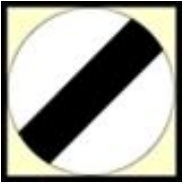
What is the meaning of this sign?

This sign means the national speed limit applies from this point.
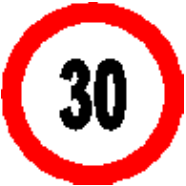
You see this sign ahead of you. It means:

A speed limit sign in a red circle is an order: do not exceed 30 kph after passing it.
What does a speed limit sign like this mean?

A speed limit is a legal maximum – you must not exceed it, and you may need to drive slower depending on conditions.
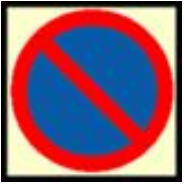
What is the meaning of this sign?

This sign indicates that waiting restrictions apply.
You may remove your seat belt temporarily when carrying out a manoeuvre that involves:
Reversing is the manoeuvre where you may briefly remove your seat belt so you can turn and see properly.
You must not reverse:
You must not reverse further than is necessary.
When you are NOT sure that it is safe to reverse your vehicle you should:
If you are unsure, get out and check before reversing; horns and slow speed do not reveal hidden hazards.
You are reversing your vehicle into a side road. When would the greatest hazard to passing traffic occur?
As you reverse round the corner the front of the vehicle swings out into the main road, which is the greatest danger to passing traffic.
11. Road and traffic signs
You MUST obey signs giving orders. These signs are mostly in:
Signs giving orders are mostly circular, and those with red circles tell you what you must not do.
At a mini-roundabout you should:

At a mini-roundabout, as at any roundabout in Malta, give way to traffic coming from the right.
What does a circular traffic sign with a blue background do?

Blue circular signs give a positive instruction, telling you what you must do.
What does a sign with a brown background show?

Signs with a brown background give directions to tourist attractions.
What are triangular signs for?

Triangular signs are warning signs that alert you to a hazard ahead.
Which FOUR of these would be indicated by a triangular road sign?

Children crossing, T-junction, road narrows and tunnel ahead are hazard warnings shown in triangles; 'ahead only' and 'minimum speed' are blue circular orders.
You are approaching a red traffic light. The signal will change from red to:

The sequence after red is red and amber together, then green.
A red traffic light means:

Red means stop: you must stop and wait behind the stop line until the light changes to green.
At traffic lights amber on its own means:

Amber alone means stop at the stop line, unless you are so close that stopping might cause an accident.
A red traffic light means:

At a red light you must stop behind the white stop line.
You are approaching traffic lights. Red and amber are showing. This means:

Red and amber together mean you must still wait; do not go until green shows.
You are at a junction controlled by traffic lights. When should you NOT proceed at green?

Even on green, do not enter the junction if your exit is blocked, as you would obstruct the junction.
What do these zigzag lines at pedestrian crossings mean?

Zigzag lines at a pedestrian crossing mean no parking at any time, so pedestrians and drivers can see each other clearly.
You are to turn right in busy traffic. How would you confirm your intention safely?
In busy traffic an arm signal together with your indicator confirms clearly that you intend to turn right.
You want to turn right at a junction but you think that your indicators cannot be seen clearly. What should you do?
If your indicators may not be seen clearly, add an arm signal to make your intention obvious.
Why should you make sure that you have cancelled your indicators after turning?
An indicator left on after turning can mislead other road users about what you are going to do.
You are waiting at a T-junction. A vehicle is coming from the right with the left signal flashing. What should you do?

The driver may have left the signal on by mistake, so wait until the vehicle actually starts to turn in before pulling out.
What is the maximum speed limit in a built up area unless indicated otherwise?
Unless signs show otherwise, the maximum speed limit in a built-up area is 50 kph.
Traffic signs giving orders are generally which shape?
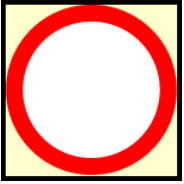
Signs giving orders are generally circular.
Which type of sign tells you NOT to do something?
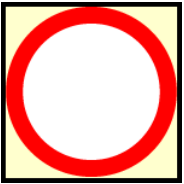


Signs with a red circle are prohibitive – they tell you what you must NOT do.
What does this sign mean?

This sign shows a maximum speed limit (20) in a zone with traffic calming measures such as humps.
Which sign means no motor vehicles are allowed?
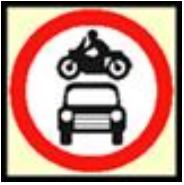
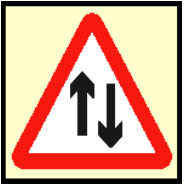
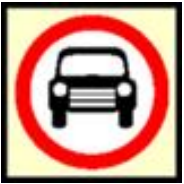
The sign showing a car and a motorcycle in a red circle means no motor vehicles are allowed.
Which of these signs means no motor vehicles?
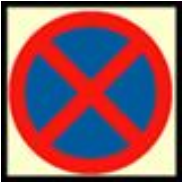
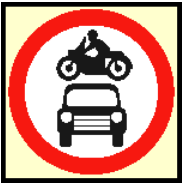
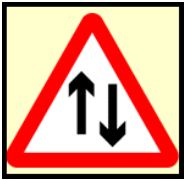
The red-circle sign showing a car and a motorcycle means no motor vehicles.
What does this sign mean?

This sign marks the end of the 20 kph zone.
What does this sign mean?

A red circle with a car and motorcycle means no motor vehicles.
What does this sign mean?

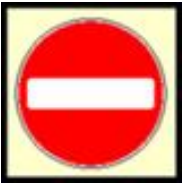
A red circle with a white horizontal bar means no entry.
What does this sign mean?

A right-turn arrow crossed out in a red circle means no right turn.
Which sign means 'no entry'?
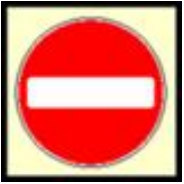
The red circular sign with a white horizontal bar means 'no entry'.
What does this sign mean?

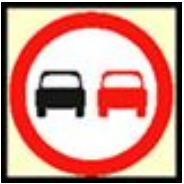
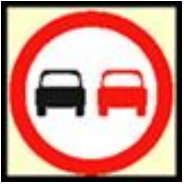
Two cars side by side in a red circle (one red) means no overtaking.
What does this sign mean?

This red-circle sign prohibits overtaking – do not overtake.
What does this sign mean?

A blue circle with a single red diagonal bar means waiting restrictions apply.
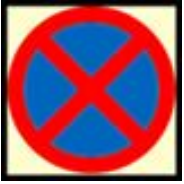
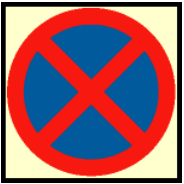
Which sign means 'no stopping'?
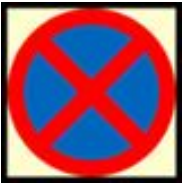
The blue circle with a red border and a red cross means 'no stopping' (clearway).
What does this sign mean?

A blue circle with a red border and red cross means no stopping.
You see this sign ahead. It means:

This sign (red cross on blue with a red border) means no stopping.
What does this traffic sign mean?

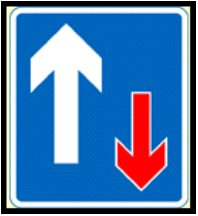
This red-circle sign means you must give priority to vehicles coming from the opposite direction.
What is the meaning of this traffic sign?

This rectangular blue sign means you have priority over vehicles coming towards you.
Which sign means 'traffic has priority over oncoming vehicles'?
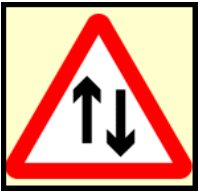
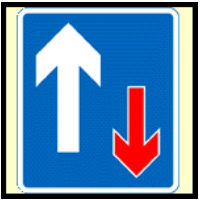
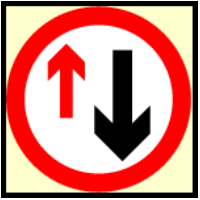
The rectangular blue sign (not the red circle) shows that you have priority over oncoming vehicles.
What MUST you do when you see this sign?

A STOP sign means you must stop completely at the line, even if the road is clear.
What does this sign mean?

This rectangular blue sign means you have priority over vehicles from the opposite direction.
What shape is a STOP sign at a junction?
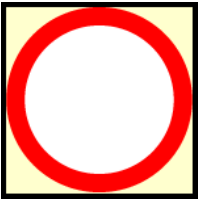
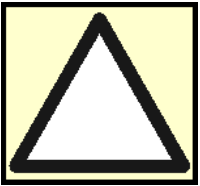
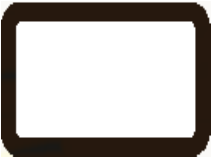
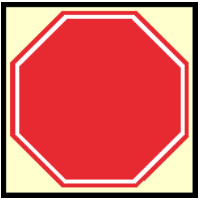
The STOP sign is octagonal (eight-sided), so it can be recognised even if the face is covered.
Which shape is used for a GIVE WAY sign?
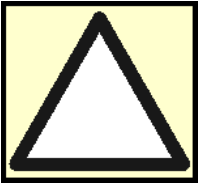
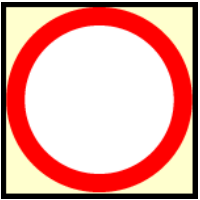
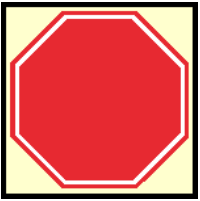
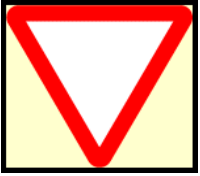
The GIVE WAY sign is an inverted (upside-down) triangle.
What does this sign mean?

This sign means you may pass either side of the obstruction to reach the same destination.
What does this sign mean?

This triangular warning sign shows a T-junction ahead.
What does this sign mean?

A cross inside a red triangle warns of crossroads ahead.
What does this sign mean?

This triangular sign with circular arrows warns of a roundabout ahead.
Which sign means that pedestrians may be walking together along the road?
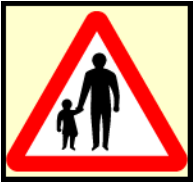
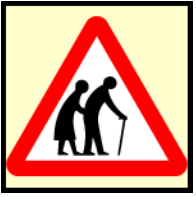
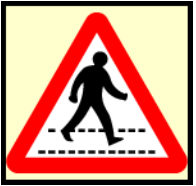
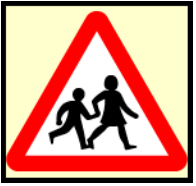
The warning triangle showing pedestrians walking in the road means there may be pedestrians along the road (no footway).
Which of these signs warns you of a pedestrian crossing?
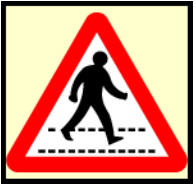
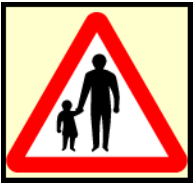
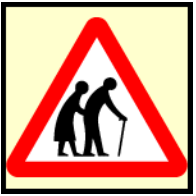
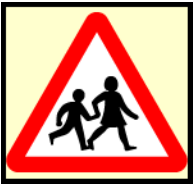
The triangular sign showing a person on a crossing warns of a pedestrian crossing ahead.
What does this sign mean?

This warning sign means there is a pedestrian crossing ahead – be ready to stop.
What does this sign mean?

This sign means pedestrian crossing ahead.
Which of these signs means there is a double bend ahead?
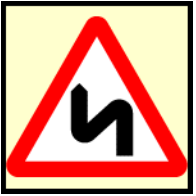
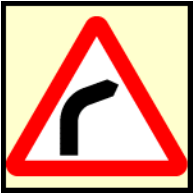
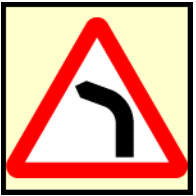
The triangle with an S-shaped bend arrow warns of a double bend ahead.
What does this sign mean?

This warning sign means there are humps in the road ahead – slow down.
What does this sign mean?

This warning sign shows a tunnel ahead.
Which of these signs means the end of a dual carriageway?
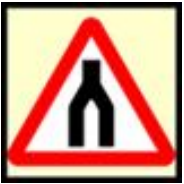
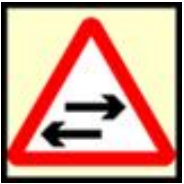
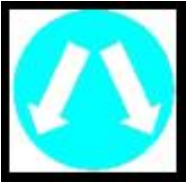
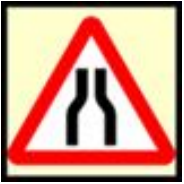
The triangle showing the central reservation ending and lanes merging means the end of the dual carriageway.
What does this sign mean?

This sign warns that the dual carriageway ends ahead; expect two-way traffic.
What does this sign mean?

This warning sign shows two-way traffic straight ahead.
What does this traffic sign mean?

A red triangle with an exclamation mark means other danger ahead.
You are about to overtake when you see this sign. You should:

A danger warning means you may not be able to see what is ahead – hold back until you can see clearly before overtaking.
What does this sign mean?

This warning sign shows a steep hill downwards – use a lower gear.
What does this sign mean?

A car falling off an edge into water warns of a quayside or river bank.
What does this sign mean?

This sign shows that the road on the left is a no through road.
What does this sign mean?

A blue square sign with a T-shaped symbol (red bar at the top) means no through road.
Which sign means 'no through road'?
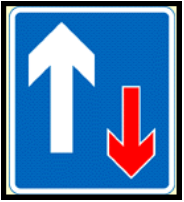
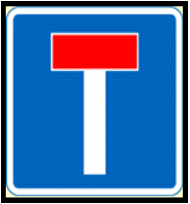
The blue rectangular sign with a white T and red bar means 'no through road'.
Which of the following signs informs you that you are coming to a No Through Road?
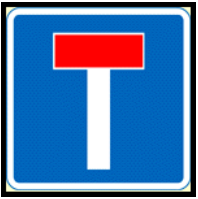
The blue sign with a white T and red bar tells you the road ahead is a no through road.
What does this sign mean?

This sign shows that the right-hand lane ahead is closed – move to the open lane in good time.
You see this traffic light ahead. Which light(s) will come on next?

The light shown is amber alone, and after amber alone comes red alone.
This marking appears on the road just before a:

A triangle painted on the road warns you of a give way sign/junction ahead.
You see this line across the road at the entrance to a roundabout. What does it mean?

A broken give way line at a roundabout means give way to traffic from the right (traffic goes round clockwise in Malta).
The driver of the car in front is giving this signal. What does it mean?

The arm signal shown is the signal for turning left.
The driver of this car is giving an arm signal. What is he about to do?

The arm signal shown means the driver is about to turn to the left.
Which of these signs means that the national speed limit applies?
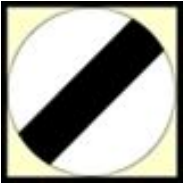
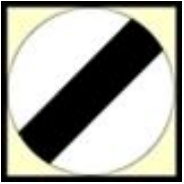
The white circular sign with a black diagonal stripe means the national speed limit applies.
Which of the following describes these road markings?

Hatching bordered by continuous white lines separates opposing traffic and must not be crossed or entered except in an emergency or when directed by the police.
12. Documents
To supervise a learner driver you must:
According to the official answer, a person supervising a learner must have held a full licence for at least 5 years.
For which THREE of these must you show your motor insurance certificate?
You must produce your insurance certificate when licensing (taxing) the vehicle, when asked by a police officer and when buying or selling a vehicle.
Before driving anyone else's motor vehicle you should make sure that:
Before driving someone else's vehicle, make sure its insurance covers you as a driver.
What is the legal minimum insurance cover you must have to drive on public roads?
Third party insurance is the legal minimum, covering injury or damage you cause to others.
Which THREE of the following do you need before you can drive legally?
To drive legally you need valid insurance, a valid road licence (tax disc) displayed and a valid signed driving licence.
Which TWO pieces of information are found on a vehicle registration document?
The registration document records details such as the make of the vehicle and its registered owner.
What is the maximum number of penalty points that will automatically disqualify a driver who holds a probationary driving licence?
According to the official answer, a probationary licence holder is automatically disqualified on reaching 12 penalty points at any time during the 3-year period.
Apart from complying with any punishment according to law what will a disqualified driver have to do to obtain a driving licence?
According to the official answer, a disqualified driver must pay outstanding fines, apply for a new licence after the disqualification ends and pass both the theory and practical tests again.
Who is responsible for ensuring that a vehicle is fully road worthy when driven on a public road?
The driver is always responsible for making sure the vehicle is roadworthy whenever it is used on a public road.
Your car has third party insurance. What does this cover?
Third party insurance covers damage or injury you cause to others (their vehicles, property and persons), not damage to your own car or injury to yourself.
A VRT certificate is normally valid for:
According to the official answer, a VRT (vehicle roadworthiness test) certificate is normally valid for two years from the date of issue.
13. Accidents
At the scene of an accident you should:
Your own safety comes first at an accident scene; you cannot help anyone if you become a casualty yourself.
You are the first to arrive at the scene of an accident. Which FOUR of these should you do?
Warn other traffic, call 112, move uninjured people away from the vehicles and switch off engines to reduce the risk of fire.
You are the first person to arrive at an accident where people are badly injured. Which THREE should you do?
Get uninjured people clear, make sure an ambulance is called (112) and switch on your hazard lights to warn traffic; do not move the injured or give them drinks.
You arrive at the scene of a motorcycle accident. The rider is injured. When should the helmet be removed?
Removing a helmet can worsen neck or spinal injuries, so only do it when it is essential (for example to keep the airway open).
You arrive at a serious motorcycle accident. The motorcyclist is unconscious and bleeding. Your main priorities should be to:
For an unconscious, bleeding casualty the priorities are a clear airway, breathing and stopping the bleeding.
You arrive at an accident. A motorcyclist is unconscious. Your FIRST priority is the casualty's:
With an unconscious casualty, breathing (and a clear airway) is the first priority, as life depends on it.
At an accident a casualty is unconscious. Which THREE of the following should you check urgently?
For an unconscious casualty, urgently check Airway, Breathing and Circulation (the ABC of first aid).
In first aid what does ABC stand for?
In first aid ABC stands for Airway, Breathing and Circulation – check these in that order.
At an accident someone is unconscious. Your main priorities should be to:
With an unconscious casualty, check the airway is clear, make sure they are breathing and stop any heavy bleeding – these keep them alive.
There has been an accident. The driver is suffering from shock. You should:
A person in shock should not be left alone and should be reassured; do not give them anything to drink or smoke.
You are at the scene of an accident. Someone is suffering from shock. You should:
For shock, reassure the casualty constantly, loosen tight clothing and keep them warm; never give them a drink or a cigarette.
You arrive at the scene of a motorcycle accident. No other vehicle is involved. The rider is unconscious, lying in the middle of the road. The first thing you should do is:
First warn other traffic to prevent a further collision; an injured rider should not be moved unless in further danger.
At an accident a small child is not breathing. When giving mouth-to-mouth you should breathe:
A small child's lungs are small and delicate, so breathe gently into them.
To start mouth-to-mouth on a casualty you should:
Before mouth-to-mouth, clear the airway, tilt the head back to open it and pinch the nostrils so air goes into the lungs.
You arrive at the scene of an accident and a casualty is suffering from severe burns. You should:
Cool severe burns thoroughly with cold water and keep reassuring the casualty; do not remove anything sticking to the burns.
You arrive at an accident where someone is suffering from severe burns. You should:
Douse the burns with cold water; don't remove anything stuck to them, burst blisters or apply lotions.
You arrive at the scene of an accident. A pedestrian has a severe bleeding wound on the leg, although it is not broken. What should you do?
Apply firm pressure to the wound and raise the (unbroken) leg to reduce the bleeding.
You arrive at the scene of an accident. A passenger is bleeding badly from an arm wound. What should you do?
Apply pressure over the wound and raise the arm – raising the limb helps reduce the bleeding.
At an accident a casualty is unconscious but still breathing. You should only move the person if:
Moving a casualty can worsen injuries, so only do so if they are in further danger (e.g. fire or traffic).
At an accident you suspect that a casualty has back injuries. The area is safe. You should:
With a suspected back injury, and no further danger, do not move the casualty at all – moving them could cause permanent damage.
The police may ask you to produce which three of these documents following an accident?
After an accident the police may ask to see your driving licence, the vehicle registration document (log book) and the insurance certificate.
On the dual carriageway the hard shoulder should be used:
The hard shoulder is for emergencies only – not for resting, reading maps or using a phone.
Which of the following should you NOT do at the scene of an accident?
Never give casualties alcohol or cigarettes; asking drivers to switch off engines, calling 112 and using hazard lights are all correct actions.
For which TWO should you use hazard warning lights?
Hazard warning lights are for warning others when you have broken down or when you slow down quickly because of a hazard ahead.
When should you switch on your hazard warning lights?
Use hazard lights when your stationary vehicle is unavoidably causing an obstruction, to warn other traffic.
Your tyre bursts while you are driving. Which TWO things should you do?
Grip the wheel firmly to keep control and slow down gradually, pulling up at the side of the road; harsh braking can make you lose control.
Which TWO things should you do when a front tyre bursts?
Hold the steering wheel firmly because the car will pull to one side, and stop gradually at the side of the road.
14. Vehicle loading
Overloading your vehicle can seriously affect the:
An overloaded vehicle is harder to control: its handling and steering are seriously affected.
Who is responsible for making sure that a vehicle is not overloaded?
The driver is responsible for ensuring the vehicle they are driving is not overloaded.
Any load that is carried on a roof rack MUST be:
A roof-rack load must be securely fastened so it cannot shift or fall off while driving.
A heavy load on your roof rack will MAINLY:
A heavy roof load raises the centre of gravity and mainly reduces the vehicle's stability.
What do child locks in a vehicle do?
Child locks stop the rear doors being opened from the inside, so children cannot open them while the car is moving.