
Official question bank: Bus / coach (D)
These questions come from the official theory question bank published by Transport Malta — the real test draws from this pool. Turkish and Maltese translations are ours; the test itself is in English or Maltese.
 Car (B)
 Motorcycle (A/A1/A2/AM)
 Lorry (C)
 Bus / coach (D)
1. Vehicle weights and dimensions
Fifteen passengers on your vehicle would increase the weight by about:
As a guide, about 15 passengers weigh roughly one tonne, which affects your bus's handling and braking.
As a guide, how many passengers equal the weight of about one tonne?
A useful rule of thumb is that about 15 passengers weigh approximately one tonne.
If you are about to overtake a motorcyclist and he looks over his right shoulder, it is most likely that:
A rider who looks over the right shoulder is usually checking before moving out or turning right, so hold back and do not overtake yet.
You are driving behind a moped and you want to turn left at a junction just ahead. You should:
Overtaking and then cutting left across the moped could cause a collision, so stay behind until it has passed the junction before you turn.
Another vehicle has overtaken you and has pulled in too close in front. You should:
Ease off to restore a safe gap in front of you; reacting aggressively only increases the danger.
A large vehicle is most stable when driven in a straight line under:
Gentle acceleration in a straight line keeps the weight of a large vehicle evenly balanced, making it most stable.
You should be careful NOT to allow your vehicle to spill diesel fuel onto the road. It can be a serious risk ESPECIALLY to:
Spilt diesel makes the road very slippery, which is especially dangerous for motorcyclists, who can easily lose grip and fall.
You are driving a vehicle with excessive exhaust smoke. Which TWO of the following are correct?
Driving a vehicle that emits excessive exhaust smoke is an offence, and you risk being reported for it.
You are following a scooter. The rider has left it too late to avoid potholes in the road. You should be aware that the rider may suddenly:
A rider who sees potholes late will often brake suddenly, so keep well back and be ready to slow down too.
3. Braking systems
As you are driving along your brake air pressure warning light comes on. You should:
Low air pressure means your brakes may fail, so stop safely as soon as possible and get help immediately.
Brake fade happens when the brakes get too:
Brake fade is a loss of braking power caused by the brakes overheating through prolonged use, for example on long descents.
Which THREE of the following are advantages of progressive braking when driving a bus?
Braking early and progressively keeps passengers safe and comfortable, saves fuel and reduces tyre wear.
To prevent brake fade you should:
Using the retarder and a lower gear controls your speed on descents without overheating the service brakes.
'Brake fade' is a loss of brake effectiveness caused by their continuous use. This may happen when driving:
On a long descent the brakes are used continuously and can overheat, causing brake fade; use a lower gear and the retarder instead.
The main cause of brake fade is:
Brake fade is caused mainly by the brakes overheating from prolonged or repeated use.
You are behind a large vehicle. How can you improve your view ahead?
Dropping further back from a large vehicle widens your field of view so you can see more of the road ahead.
You should overtake at night only when:
At night, overtake only if you can see far enough ahead to complete the manoeuvre and can move back in without cutting in on the vehicle you passed.
After driving through a flood you should:
Driving slowly in a low gear with the footbrake lightly applied generates heat that dries the brakes; then test them before continuing normally.
Coasting downhill could seriously affect the correct working of what?
When coasting, the engine runs at idle and the compressor may not keep up with the extra brake use, so air brake pressure can drop dangerously.
Your vehicle has power-assisted steering. Its main purpose is to:
Power-assisted steering reduces the effort needed to turn the steering wheel, especially at low speeds.
Many vehicles are fitted with power-assisted steering. You need to be aware that this:
Power steering responds as soon as you start turning the wheel and makes steering feel light and easier, so take care not to over-steer.
On a vehicle with automatic transmission you would use 'kickdown' to:
Pressing the accelerator fully down (kickdown) makes an automatic gearbox change to a lower gear for quicker acceleration, for example when overtaking.
4. The driver
What should you do if you are driving in busy traffic and you lose your way?
Do not let getting lost distract you in busy traffic; keep driving until you can stop safely and legally, then check your route.
Your nearside mirror is most likely to endanger pedestrians when:
On a bus or large vehicle the nearside (left) mirror sticks out over the pavement when you drive close to the kerb and can strike pedestrians.
You should use the 'two-second rule':
The two-second rule is a simple way to check you are keeping a safe following distance from the vehicle in front in good conditions.
Before starting your engine your seat should be adjusted for:
Adjust the seat height, distance from the controls and back support so you can reach everything comfortably and see clearly.
A properly adjusted head restraint will:
A correctly adjusted head restraint stops your head being thrown back in a collision, reducing the risk of neck (whiplash) injury.
What could reduce the risk of neck injury in a collision?
A properly adjusted head restraint supports your head in a collision and reduces the risk of whiplash.
You may remove your seat belt when carrying out a manoeuvre that involves:
You are allowed to take off your seat belt while reversing, so you can turn round to see behind; put it back on afterwards.
You are driving along this road. The red van cuts in close in front of you. What should you do?

Stay calm and ease off to rebuild a safe gap behind the red van; flashing, hooting or closing up only makes the situation more dangerous.
While driving you approach a large puddle that is close to the left-hand kerb. Pedestrians are close to the water. You should:
Slow down before the puddle and, where safe, keep away from it so that you do not splash the pedestrians standing nearby.
What should you do if a long heavily laden lorry is taking a long time to overtake you?
Easing off slightly helps a slow, heavily laden lorry finish overtaking sooner and move back in safely.
You are driving a slow-moving vehicle on a narrow road. If a car wishes to overtake you should:
Pull in at the first safe place to let following traffic pass; do not wave others on, as you could lead them into danger.
You are driving a slow-moving vehicle on a narrow winding road. In order to let other vehicles overtake you should:
On a narrow, winding road, pull in when it is safe to do so to let queuing traffic pass.
What should you use your horn for?
The horn is only for warning other road users that you are there; never use it in anger, as a greeting or to claim priority.
You are following a car driven by a learner driver. You cannot overtake it. You should:
Learner drivers may stall, brake suddenly or hesitate, so be patient, keep well back and be ready for their mistakes.
Large vehicles have many blind spots. What does 'blind spot' mean?
A blind spot is an area around the vehicle that you cannot see in your mirrors, so you need extra checks before moving off or changing position.
You are driving a vehicle fitted with a hand-held telephone. To answer it you should
Using a hand-held phone while driving is dangerous; find a safe place to stop before answering it.
You have a mobile telephone fitted in your vehicle. It should only be used when you are:
A phone distracts you from driving, so only use it when you have stopped in a safe place.
A pelican crossing that crosses the road in a STRAIGHT line and has a central island must be treated as:
If a pelican crossing goes straight across the road, it is one crossing even with a central island, so you must wait for pedestrians crossing from either side.
At a zebra crossing you should:
Never stop on a zebra crossing in queuing traffic; keep it clear so pedestrians can cross safely.
In fast traffic a two-second gap may be enough only when conditions are:
A two-second gap is only enough in good, dry conditions; in wet, damp or foggy conditions you need a much larger gap.
Following a large goods lorry too closely is dangerous because:
Close behind a large lorry you cannot see the road ahead, so you cannot anticipate hazards; drop back to improve your view.
You are following a car on a wet road. What should your following distance be?
On wet roads stopping distances can double, so increase the two-second gap to at least four seconds.
A coach is overtaking you. When it is safe for the coach to move back to the left you should:
Easing off gives the coach room to move back in safely and restores a safe gap in front of you; do not use light signals that could be misunderstood.
What should you do when being followed by an ambulance showing a flashing blue beacon?
Help the emergency vehicle get through by pulling over as soon as it is safe, without braking harshly or doing anything dangerous.
A bus has stopped at a bus stop ahead of you and its right-hand indicator is flashing. You should:
A bus signalling to pull away from a stop wants to rejoin the traffic; slow down and let it out when it is safe.
You stop for pedestrians waiting to cross at a zebra crossing. They do not start to cross. What should you do?
Be patient and give pedestrians time; do not wave them across, because another vehicle may not have stopped.
You should beckon pedestrians to cross the road at:
Never beckon pedestrians to cross: another vehicle may be coming and they could be hurt relying on your signal.
You should never wave people across at zebra crossings because:
Your signal could lead pedestrians to step out in front of another vehicle that has not stopped.
You are driving close to the kerb in a busy shopping area. What dangers should you be most aware of?
Near the kerb in a busy area, watch for cyclists passing on your left, your nearside mirror overhanging the pavement and pedestrians stepping into the road.
You have stopped for an elderly pedestrian who is slowly crossing the road. Traffic behind you is being held up. What should you do?
Elderly pedestrians may need more time; wait patiently until he has crossed, whatever the traffic behind you.
Where should you NOT park your vehicle or trailer:
Parking opposite a traffic island narrows the road, parking in front of an entrance blocks access, and parking near the brow of a hill puts you where approaching drivers cannot see you.
Mirrors fitted to your vehicle MUST be:
Mirrors are only useful if they are clean and properly adjusted so you can see clearly behind and to the sides.
You are driving a slow moving vehicle along a narrow road. You should let other vehicles overtake by:
Pull in at a safe place when you can so that following traffic can pass; signals or waving could mislead other drivers.
As you drive past a group of school children standing close to the kerb you should:
Children near the kerb are on your left (nearside); check the nearside mirror so that your vehicle and mirror stay clear of them.
You are driving at a legal speed limit. A vehicle comes up quickly behind flashing its headlights. You should:
Do not get involved or try to 'teach a lesson'; let the faster vehicle overtake when it is safe so it is no longer behind you.
A vehicle pulls out in front of you at a junction. What should you do?
Stay calm and slow down, ready to stop if necessary; reacting aggressively increases the risk of a collision.
Your mobile phone rings while you are driving. You should:
Do not answer while driving or stop dangerously; find a suitable, safe place to pull up and then deal with the call.
You are most likely to lose concentration when driving if you:
Using a mobile phone takes your attention away from the road far more than routine tasks such as checking mirrors.
You should ONLY use a mobile/cellular phone when:
Only use a mobile phone when you are suitably and safely parked, never while driving.
Which THREE result from drinking alcohol and driving?
Alcohol gives false confidence, reduces control and impairs your judgement of speed; it never improves awareness or reactions.
Which THREE of these are likely effects of drinking alcohol on driving?
Alcohol makes drivers over-confident, reduces coordination and impairs judgement, all of which raise the risk of a crash.
Drinking any amount of alcohol is likely to:
Even a small amount of alcohol gives false confidence, worsens judgement of speed and slows your reactions to hazards.
What else can seriously affect your concentration when driving, other than alcoholic drinks?
Loud music, tiredness and drugs (including some medicines) can all seriously reduce your concentration at the wheel.
How does alcohol affect your driving?
Alcohol reduces your concentration and slows your reactions; it never improves driving ability.
Your doctor has given you a course of medicine. Why should you ask if it is OK to drive?
Some medicines can slow your reactions or cause drowsiness, so always ask whether it is safe to drive.
You are about to drive home. You feel very tired and have a severe headache. You should
Tiredness and illness slow your reactions; wait until you are fit and well before driving.
5. Carrying passengers
As a bus driver your first consideration is to your:
A bus driver's first duty is to the passengers and their safety.
As a bus driver your main responsibility is:
The safety and comfort of passengers always come before tickets, fares or the timetable.
As a bus driver you should show care to your passengers. You can do this by:
Letting passengers sit down before moving off and stopping close to the kerb so they can get on and off safely both show care for them.
What is the MAIN reason for maintaining a smooth acceleration when driving your bus?
Smooth acceleration mainly prevents passengers, especially those standing, from being thrown about, keeping them comfortable and safe.
When driving a bus what are your main priorities?
A bus driver's main priorities are the safety and the comfort of the passengers.
For the comfort of your passengers harsh braking should be avoided. You should therefore:
Planning ahead lets you brake early and gently for every stop and hazard, so you never need to brake harshly.
If a bus driver brakes harshly the passengers may be thrown towards
Under harsh braking the bus slows but the passengers' bodies keep moving forward, so they are thrown towards the front.
How can you avoid harsh braking?
By looking well ahead and reacting early you can slow down gradually instead of braking harshly.
Well ahead of you are traffic lights on green. What should you do in case the lights change to red?
A green light that has been on for a while may change; easing off early means you can stop smoothly if it turns red.
For passenger safety and comfort you should always:
Thinking ahead, braking smoothly and stopping close to the kerb all keep passengers safe and comfortable.
Before moving off from a standstill a bus driver should be especially aware of passengers who attempt to:
Passengers trying to board or alight as the bus moves off can easily fall or be trapped, so check carefully before pulling away.
A passenger with special needs is boarding your bus and he tells you that getting on board is not a problem for him. You should:
Respect the passenger's wishes: if he says he can board without difficulty, let him do so on his own while you watch that it is done safely.
While driving a bus carrying passengers at night you should always put the interior lights on because:
Interior lights let passengers see where they are going inside the bus, so they can move around, find seats and get off safely.
As you move off watch out in particular for any passengers who attempt to:
Someone trying to jump on as you pull away could fall or be trapped, so always check your mirrors for late boarders.
When you pull away from a bus stop watch out in particular for passengers who attempt to:
Passengers trying to get off as the bus moves away risk falling, so watch for them before and while pulling away.
If a passenger finds walking difficult what could you do to help?
A passenger with walking difficulties could easily fall if the bus moves off, so wait until he is seated before pulling away.
A bus driver MUST NOT drive whilst:
Handling money or tickets takes your attention off the road, and driving with the doors open puts passengers at risk of falling out.
6. The road
Entrances to roundabouts are slippery when wet. You should always:
Roundabout approaches can be slippery when wet, so brake early and gently while travelling straight to avoid skidding.
What should you do every time before pulling into or moving out from a bus stop?
Always use the Mirrors-Signal-Manoeuvre routine when pulling in to or out of a bus stop, so you know what traffic and cyclists are around you.
You are driving in heavy rain. Your steering suddenly feels light. What should you do?
Light steering in heavy rain means the tyres may be aquaplaning; ease off the accelerator gently so the tyres regain grip, without braking or steering sharply.
You are waiting at a T-junction. A vehicle is coming from the right with the left signal flashing. What should you do?
A signal does not guarantee the driver will turn; wait until the vehicle actually starts to turn in before emerging.
You are about to pass this car. What are the TWO main hazards you should be aware of?

A parked car may pull out without warning and its driver's door may open suddenly, so leave plenty of room.
Before braking in wet conditions you should make sure as far as possible that:
Braking while travelling in a straight line reduces the risk of skidding on a wet road.
When driving on which TWO occasions would you be most likely to experience weight transfers?
Cornering shifts weight sideways and braking shifts weight forwards, so these are when weight transfer is felt most.
When driving a laden vehicle downhill the effect of gravity will tend to:
Going downhill with a load, gravity makes the vehicle speed up, so more braking effort is needed and stopping distances increase.
Which of these vehicles is most at risk from strong crosswinds on motorways?
Motorcycles are light and easily blown off course by strong crosswinds.
You are driving a large vehicle in gusty conditions. Which of the following is most likely to be affected when you overtake it?
In gusty winds a motorcycle is easily unsettled by the wind and the air turbulence from a large vehicle overtaking it.
Which road users are in the most danger from the buffering effects of large vehicles?
Cyclists, horse riders and pedestrians are unprotected and can be pushed or unsettled by the air buffeting from large vehicles.
Turbulence is created by large vehicles traveling at speed. This is most likely to be a danger to:
Air turbulence from fast large vehicles can unsettle pedestrians, caravans, motorcyclists and cyclists.
You are following a scooter on an uneven road. You should:
Riders may swerve suddenly to avoid potholes on an uneven road, so give them extra room.
The road is wet. Why might a motorcyclist steer around drain covers on a bend?
Wet drain covers are slippery and can make a motorcycle skid, especially when leaning on a bend.
In heavy rain what is the least amount of space you should allow for braking?
On wet roads stopping distances can be at least double, so allow at least twice the normal distance.
You are driving on a dual carriageway; the vision ahead of you is poor due to heavy spray. Which THREE of the following should you do?
In heavy spray use dipped headlights so you can be seen, slow down and increase your gap, e.g. to four seconds.
You are driving in heavy rain. Why is there a need to increase your distance from the vehicle in front?
In heavy rain stopping distances can double, spray reduces your view ahead and tyres have less grip.
A driver pulls out of a side road in front of you. You have to brake hard. You should:
Everyone makes mistakes; stay calm and do not react aggressively.
A car driver pulls out causing you to brake. You should:
Keep calm and do not retaliate; reacting aggressively only increases the risk of a collision.
Tailgating another vehicle is dangerous because:
Following too closely reduces your view of the road ahead and leaves you less room to brake.
You should take care when overtaking at night because:
At night it is harder to judge the speed and distance of oncoming vehicles, so take extra care before overtaking.
What should you do before overtaking or changing lanes?
Always check your mirrors carefully before overtaking or changing lanes to see what is behind and alongside you.
You have just overtaken another vehicle. When moving back in you should avoid:
Cutting in forces the overtaken vehicle to brake; move back only when you can see it in your mirror.
You should not overtake when:
Do not overtake if others would have to slow down, if you cannot see clearly ahead, or if you would have to exceed the speed limit.
After overtaking another large vehicle how would you know when it was safe to move back to the nearside lane?
Check your nearside mirror and move back only when the overtaken vehicle is well clear behind you; do not rely on its driver's signals.
Because of its size and design a large vehicle will have:
Large vehicles have more and bigger blind spots than smaller vehicles, so mirror checks are vital.
You are driving on a dual carriageway and intend to overtake the vehicle ahead. Behind there is a car approaching quickly in the right-hand lane. You should:
Pulling out in front of a fast-approaching car would be dangerous; stay behind the slower vehicle until it is safe.
What should you do after overtaking on a dual carriageway?
After overtaking, return to the left-hand lane as soon as it is safe to do so.
You are intending to turn right at a roundabout driving a long vehicle. You need to occupy part of the left-hand lane. You should check mirrors and:
Signal right on approach so other road users know your intention even though you are using part of the left-hand lane.
You are driving at night in a built up area. To ensure that you can be seen you should use:
In a lit built-up area at night, dipped headlights make you visible without dazzling others.
7. Accident handling
If your bus and other vehicles have been involved in an accident what should you do?
You must stop at the scene of an accident you are involved in, and switching off the fuel supply reduces the risk of fire. Call 112 if anyone is injured.
At an accident a casualty is unconscious. Which three of the following should you check urgently?
For an unconscious casualty, check Airway, Breathing and Circulation (ABC) first; call 112.
You arrive at the scene of an accident that has just happened and someone is unconscious. Which of the following should be given urgent priority to help them?
Priorities are to clear and keep the airway open, check breathing and stop any heavy bleeding; call 112.
At an accident a casualty is unconscious but still breathing. You should only move them if:
Moving a casualty can worsen injuries; only move them if there is further danger.
Which type of fire extinguisher should NOT be used on flammable liquids?
Water conducts and spreads burning liquids, so a water extinguisher must not be used on flammable liquid fires.
Before driving through a tunnel what should you do?
Tunnels are darker than outside, so remove sunglasses before entering to see properly.
You are driving through a tunnel and the traffic is flowing freely. What should you do?
Use dipped headlights in a tunnel so you can see and be seen.
You are driving through a congested tunnel and had to stop in traffic. What should you do?
Keep a safe distance from the vehicle in front even when stopped in a tunnel, so you can react if something happens.
You are driving through a tunnel. Your vehicle breaks down. What should you do?
If you break down in a tunnel, switch on your hazard warning lights so other drivers are warned.
You have an accident while driving through a tunnel. You are not injured but your vehicle cannot be driven. What should you do first?
First make the scene safe: switch off the engine to reduce fire risk and switch on hazard lights to warn others.
8. Vehicle condition
What does this warning light on the instrument panel mean?

This warning light indicates a fault in the braking system; stop safely and have it checked before continuing.
Whilst driving your steering suddenly becomes heavy to turn. What could this indicate?
Heavy steering can be caused by a front tyre puncture or by a failure of the power-assisted steering.
Air tanks on brake systems require draining because:
Air drawn in from the atmosphere contains moisture which condenses in the tanks and must be drained.
What does this warning light on the instrument panel mean?

This warning light indicates low engine oil pressure; stop safely and investigate.
As you are driving the ignition warning light comes on. What does it warn of?

The ignition (battery) warning light indicates an electrical fault, such as the alternator not charging.
9. Leaving the vehicle
As a bus driver your main aim is to:
Above everything else, a bus driver's main aim is to keep passengers safe.
You are a bus driver. You are at a bus stop issuing tickets. You should:
While you are still issuing tickets you are not ready to go, so do not signal yet; signal only just before you are ready to move off.
Your nearside mirror is there for you to check:
In Malta the nearside is the left side of the vehicle, so the nearside mirror shows traffic, such as cyclists or motorcyclists, passing on your left.
When you intend to open your right-hand door you should check:
Before opening the right-hand (traffic-side) door, check the mirror so you do not open it into the path of passing traffic.
Where should you pull up when stopping to collect passengers from a bus stop?
Stopping close to the kerb lets passengers step on and off safely without stepping into the road.
You should stop your bus, to allow passengers to get on or off, near:
Pull up close to the kerb so passengers can get on and off safely.
Several cars have parked blocking your bus stop. Before you allow passengers to get off you should:
If you cannot reach the kerb, passengers will step off on the left away from the kerb, so check the left side is clear of traffic such as cyclists or motorcyclists before opening the doors.
What should you do before allowing passengers off your bus?
Checking the mirrors before opening the doors makes sure no cyclist or other road user is passing where passengers will step off.
Some passengers may be in a hurry to get off the bus as you approach a bus stop. What should you do to avoid any danger?
Opening the doors only when the bus has completely stopped prevents passengers from stepping off a moving bus.
11. Restricted view
What should you first check before moving to the LEFT?
Before moving left, first check the nearside (left) mirror to see any cyclists or vehicles on that side.
What should you first check before moving to the RIGHT?
Before moving right, first check the offside (right-hand) mirror.
You are about to move off. You should always:
Before moving off always use your mirrors and look behind to check blind spots.
In which THREE of the following situations would you FIRST need to check your nearside mirror?
Check the nearside mirror first after passing cars or pedestrians on your left and before moving to the left.
The MSM routine is used to negotiate a hazard. What do the initials MSM stand for?
MSM stands for Mirror, Signal, Manoeuvre, the routine for dealing with hazards.
You are turning right onto a dual carriageway from a side road. Your vehicle is too long for the central gap. How should you proceed?
If your vehicle is too long to wait in the central gap, wait until the road is clear in both directions before emerging.
You are turning right at a T-junction. Your view to the right and left is blocked due to parked vehicles. You should:
Ease forward slowly until you can see clearly past the parked vehicles before emerging.
Motorcycle riders are more at risk from other road users. This is because they:
Motorcycles are small and more difficult for other road users to see, which puts riders at greater risk.
What is the MAIN cause of motorcycle collisions?
Most motorcycle collisions are caused by other drivers failing to see the motorcyclist.
At road junctions which of the following are most at risk?
Cyclists, pedestrians and motorcyclists are the most vulnerable road users at junctions.
Driving too close to the vehicle in front will:
Driving too close reduces your view of the road ahead.
At junctions it is difficult to see motorcyclists because they:
Motorcyclists are smaller than other vehicles and can easily be hidden in blind spots or behind other objects.
Drivers should be aware that motorcyclists are more vulnerable ESPECIALLY:
Motorcyclists are especially vulnerable on poor road surfaces, in gusty winds and to vehicles emerging from junctions.
Before reversing you MUST always:
Before reversing you must look all around, as large vehicles have big blind areas behind them.
12. Documents
You will be driving your vehicle in Europe. Which of these documents MUST you carry?
When driving in Europe you must carry your national driving licence.
When driving in Europe you must carry:
When driving in Europe you must carry the vehicle registration document.
You intend to drive in Europe. What must you carry?
You must carry your national driving licence when driving in Europe.
13. Environmental issues
Which of the following vehicles are MOST likely to cause severe damage to the road surfaces?
Heavy vehicles such as lorries and buses put far greater loads on the road surface than lighter vehicles.
You are waiting for some time in a stationary traffic queue. Why should you switch your engine off?
Switching off when stationary for a while cuts exhaust fumes and noise and avoids annoying people nearby.
You can help to reduce the impact of road transport on the environment by
Braking in good time and avoiding over-acceleration save fuel and reduce emissions.
As a driver you can help to protect the environment by:
Using bypasses and avoiding town centres reduces congestion and pollution in towns.
As a driver you can help to ease traffic congestion by:
Planning your route to avoid busy times helps ease congestion.
Which three of the following could cause unnecessary pollution to the environment?
Badly maintained vehicles, poor driving and excessive exhaust fumes all cause unnecessary pollution.
Diesel fuel has been spilled on the road. This will cause particular danger to:
Spilt diesel makes the road very slippery, which is particularly dangerous for two-wheeled motorcycles.
What must you do after filling your fuel tanks?
After refuelling, make sure filler caps are securely closed and clean up any spilt fuel to avoid danger to others.
14. Other road users
Your vehicle leaks diesel fuel at a roundabout. This will most affect:
Diesel on a roundabout makes the surface very slippery, which is most dangerous for motorcyclists leaning into the bend.
You have lost the filler cap to your diesel tank. You should:
Without a filler cap fuel can spill onto the road; get a replacement before driving.
The vehicle ahead is being driven by a learner driver. You should:
Learners may make mistakes or react slowly; keep calm and be patient.
You are driving towards a zebra crossing. Waiting to cross is a person in a wheelchair. You should:
A person waiting at a zebra crossing may step out; be prepared to stop, and do not wave them across.
You have stopped at a pelican crossing. A person with special needs is crossing slowly in front of you. The lights have now changed to green. You should:
Even when the light turns green, allow the person to finish crossing and be patient.
Which sign means that there may be people walking along the road?
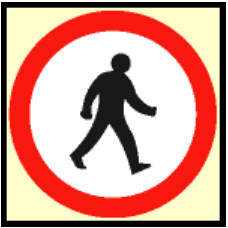
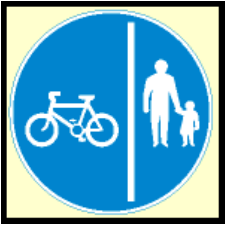
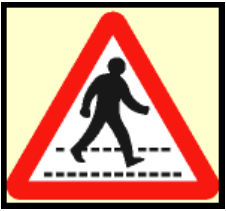
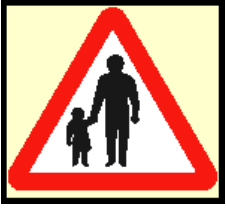
The correct sign is the warning for pedestrians in the road ahead (no footway).
You are turning left at a junction. Pedestrians have started to cross the road. You should
Pedestrians already crossing the road you are turning into have priority; give way to them.
You are turning left from a main road into a side road. People are already crossing the road into which you are turning. You should
People already crossing the road you are turning into have priority; wait and let them cross.
You are at the road junction turning into a minor road. There are pedestrians crossing the minor road. You should:
Pedestrians crossing the road you are turning into have priority; stop and wait for them to cross.
You intend to turn right into a side road. Just before turning you should check for motorcyclists who might be:
In Malta overtaking is on the right, so before turning right check for motorcyclists overtaking on your right.
What action would you take when elderly people are crossing the road?
Elderly pedestrians may be slow; be patient and let them cross in their own time without hurrying them.
You see two elderly pedestrians about to cross the road ahead. You should:
Elderly pedestrians may misjudge the speed of approaching vehicles, so be careful.
You are coming up to a roundabout. A cyclist is signaling to turn right. What should you do?
A cyclist turning right at a roundabout may stay in the left lane and cross your path; give them plenty of room.
You are waiting to come out of a side road. Why should you watch carefully for motorcycles?
Motorcycles are smaller and hard to see, so look carefully before emerging.
In daylight an approaching motorcyclist is using a dipped headlight. Why?
Motorcyclists use dipped headlights in daylight so that they can be seen more easily by other road users.
Motorcyclists should wear bright clothing mainly because:
Drivers often fail to see motorcyclists; bright clothing makes them more visible.
Motorcyclists will often look round over their right shoulder just before turning right. This is because:
Mirrors do not cover everything; riders look over their shoulder to check their blind area before turning.
At road junctions which of the following are most vulnerable?
Cyclists, pedestrians and motorcyclists are the most vulnerable road users at junctions.
As you approach a pelican crossing the lights change to green. Elderly people are halfway across. You should:
Elderly people take longer to cross; wait until they have finished crossing even if your light is green.
You are approaching this crossing. You should:

Pedestrians may be about to use the crossing, so prepare to slow down and stop.
You are following a motorcyclist on an uneven road. You should:
Motorcyclists may swerve to avoid potholes on an uneven road, so allow extra room.
You are following two cyclists. They approach a roundabout in the left-hand lane. In which direction should you expect the cyclist to go?
Cyclists in the left-hand lane at a roundabout may go in any direction, including turning right, so be prepared.
Which THREE of the following are hazards motorcyclists present in queues of traffic?
In queues motorcyclists may filter between lanes, pass very close and cut in just in front of you.
How would you react to drivers who appear to be inexperienced?
Inexperienced drivers may react slowly or make mistakes; be patient and allow for this.
You are following a learner driver who stalls at a junction. You should:
Learners are expected to make mistakes such as stalling; be patient.
You are following a car driven by an elderly driver. You should:
Elderly drivers' reactions may be slower, so allow for this and keep a safe distance.
You want to turn right from a main road into a side road. Just before turning you should:
In Malta vehicles overtake on the right, so check for traffic overtaking on your right just before turning right.
You are driving in town. There is a bus at the bus stop on the other side of the road. Why should you be careful?
Pedestrians who have just got off the bus may step out from behind it into your path without seeing you.
How should you overtake horse riders?
Horses can be easily startled; pass them slowly and leave plenty of room.
You are driving on a main road. You intend to turn right into a side road. Just before turning you should:
Overtaking in Malta is on the right, so just before turning right check for traffic overtaking on your right.
15. Traffic signs
Which sign means 'No stopping'?
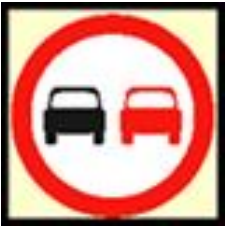
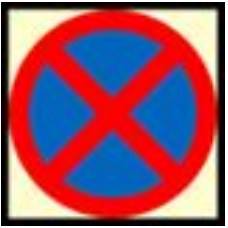
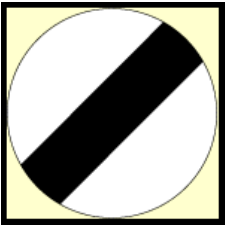
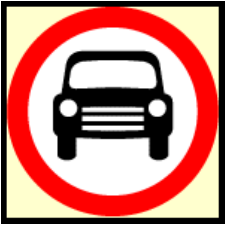
The 'No stopping' (clearway) sign is a red circle with a blue background crossed by a red X.
What is the meaning of this traffic sign?

This sign (usually a blue square with a white and red arrow) means you have priority over vehicles coming towards you.
What does this sign mean?

This rectangular blue sign means you have priority over vehicles from the opposite direction.
Which FOUR of these would be indicated by a triangular road sign?

Triangular signs give warnings: low bridge, road narrows, T-junction and children crossing; 'Ahead only' and 'Minimum speed' are circular orders.
Which sign means that pedestrians may be walking along the road?
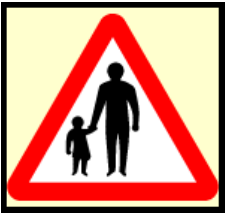
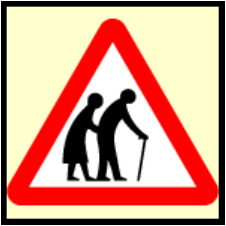
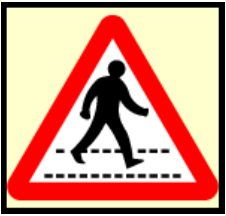
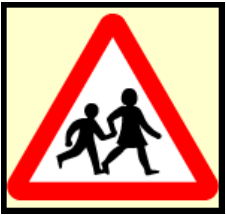
The correct sign is the warning for pedestrians walking in the road ahead (no footway).
What does this traffic sign mean?

A red triangle with an exclamation mark warns of danger ahead, often with a plate giving details.
You see this traffic light ahead. Which light(s) will come on next?

The light shown is amber alone, and after amber alone comes red alone.
What should you do when you see these flashing red lights?

Flashing red lights (e.g. at level crossings, swing bridges or emergency access) mean you must stop and wait.
What does this sign mean?

This sign (red cross on a blue background in a red circle) means no stopping at any time.
What does this sign mean?

A red circle with a crossed-out U-shaped arrow means no U-turns.
The driver of the car in front is giving this arm signal. This means the driver:

This arm signal (arm out of the window rotating anticlockwise) means the driver intends to turn left.
You are approaching this sign. Who has priority?

This sign (red circle with a red and black arrow) means give priority to oncoming traffic.
You are approaching a red traffic light. What signal or signals will show next?

The sequence after red is red and amber together, then green.
You see this sign ahead. What should you do?

This is a warning sign that the road narrows ahead, so slow down.