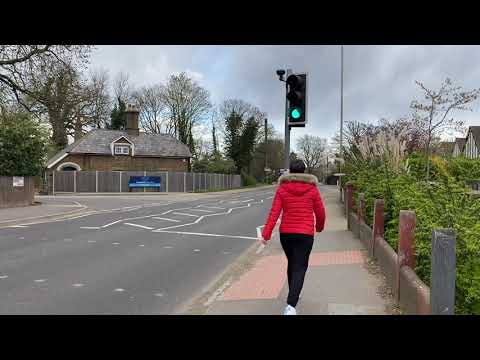
🚸 Junctions, crossings and traffic lights
STOP vs give way, emerging safely (peep and creep), yellow box junctions, the zebra crossing procedure, traffic lights and school-time no-entry signs.
Most test faults happen at junctions — especially in Malta's narrow streets lined with parked cars that restrict the view. In this lesson we cover approaching and emerging from junctions, and the spaces we share with pedestrians.
STOP and give way

| STOP | Give way | |
|---|---|---|
| Sign | Red octagon | Inverted triangle with red border |
| Road marking | Single thick continuous line, "STOP" written | Double broken line, triangle on the road |
| Must you stop? | Yes, always, the wheels must stop completely | Only if needed; if clear you may slow and continue |

Approaching a junction — MSPSL
- Mirrors and, if needed, signal.
- Position: close to the left for a left turn; just left of the centre of the road for a right turn (without crossing the line).
- Speed: brake, then the right gear (usually second; first at a narrow, blind junction).
- Look: right – left – right, and again in the direction you're turning.
Emerging: peep and creep
In Malta, junction corners are often blocked by parked cars. Then:
- Stop at the line (compulsory at a STOP) and look as far as you can.
- First gear, biting point. Creep the car forward slower than walking, a few centimetres at a time, looking right and left after each movement.
- You should see before your nose is in the road — and oncoming drivers will see your nose too.
- Once you can see clearly and there's a big enough gap, go positively — hesitation is dangerous too.
Yellow box junctions

- If there isn't room for your whole car on your exit, don't enter the box; stop before it.
- Exception: when turning right you may wait in the box if your exit is clear and you're only held up by oncoming traffic.
- Even on green, you can get stuck in the box if the traffic ahead stops — see it coming.
Zebra crossing procedure
- 50 m before: mirrors, cover the brake, scan both sides of the crossing — everyone waiting on the pavement and walking towards it.
- If someone is about to cross, slow down smoothly and stop before the crossing (no overtaking or parking in the zigzag area).
- While people cross: handbrake and neutral. Don't wait with your foot on the clutch where it could jerk the car.
- Wait until the pedestrians reach the other pavement.
- First gear, mirrors, look both ways again, then move off.
Traffic lights
| Light | Meaning |
|---|---|
| Red | Stop, wait at the line |
| Red + amber | Still stop; get ready for green |
| Green | Go if the way is clear — but still look; pedestrians and late vehicles may be in the junction |
| Amber (alone) | Stop — unless you've crossed the line or are so close that stopping could cause a crash |
| Green arrow | Only in the direction of the arrow, if you're in the right lane |
Covering the brake 50 m before the lights lets you decide immediately, when amber comes on, whether you can stop safely. A light that has been green for a long time (a "stale green") can change at any moment.
School-time no-entry signs and time plates

Around schools in Malta, signs that close the road at drop-off and pick-up times are very common. The plate below gives the times, for example:
- Winter times: 07:05–08:35 and 13:55–14:55
- Summer times: 07:05–08:35 and 10:55–11:55
- On school days only; school transport exempt.
School zones may also have a lower speed limit (for example 30 km/h), and children appear from unexpected places. Leave a metre from parked cars and more from people.